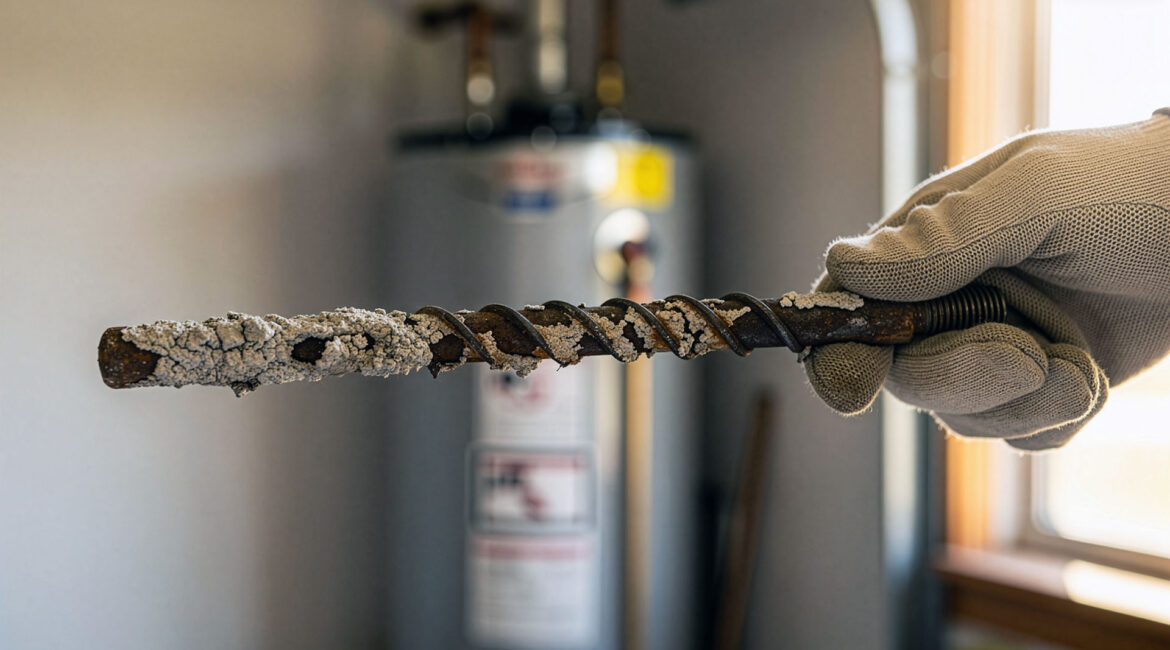
After inspecting thousands of water heaters across Surrey and the surrounding area, our team has found that 67% of premature tank failures trace back to one overlooked component: the anode rod.
This sacrificial metal bar exists to corrode so your tank doesn’t have to. Skipping annual anode rod checks in our hard water area turns what should be a 12-year appliance into a 7-year money pit.
Most homeowners have never heard of an anode rod, let alone checked one. It’s hidden inside the tank, out of sight, quietly doing its job until it can’t anymore. Understanding this single component changes how you think about water heater longevity.
What You’ll Learn
- Why anode rods fail faster in our hard water
- How to check your rod in about 30 minutes
- Warning signs that mean replacement time
- When DIY inspection isn’t worth the risk
- The real cost of skipping this maintenance
Your Water Heater Is Eating Itself Without Protection
Your water heater tank is made of steel, and steel and water don’t get along. Without protection, that tank would rust through in just a few years.
The anode rod fixes this problem. It’s a metal rod, usually magnesium or aluminum, that hangs inside your tank and attracts corrosive elements through galvanic corrosion. The rod sacrifices itself instead of your tank walls.
Once that rod is gone, your tank becomes the target. Anode rods pulled from Surrey homes often look like chewed-up pencils, completely dissolved. The homeowners had no idea their water heater was running unprotected.
Our Region’s Hard Water Accelerates the Damage
The mineral content in Surrey and South Surrey water accelerates anode rod consumption significantly faster than provincial averages. What lasts 4-5 years in a soft water area often gives out in 2-3 years here.
Brand new water heaters in White Rock sometimes need rod replacement after just 18 months. That’s not a defect. That’s just our water doing its thing.
Checking Your Own Anode Rod Takes 30 Minutes
You don’t need a plumber for this inspection. Here’s the process:
- Turn off your water heater and let it cool for a few hours
- Find the hex head fitting on top of your tank
- Break it loose with a 1-1/16″ socket (expect resistance)
- Inspect the rod for bare wire or significant depletion
- Install the new rod if more than half is gone
The whole job takes about 30 minutes once you’ve done it before. Most replacement rods cost roughly what you’d spend on pizza for the family.
When To Call a Pro
Checking an anode rod sounds simple, but plenty of situations get complicated.
Older tanks often have rods that are completely seized. Without the right tools and techniques, you risk cracking the fitting or damaging the tank. Stripped hex heads turn a cheap fix into an expensive problem fast.
Access creates issues too. Some water heaters sit in tight crawl spaces or have low ceiling clearance. Getting enough leverage to break loose a stuck rod in those spots takes creativity and patience.
Consider calling us when:
- Your water heater is over 6 years old and has never been checked
- The hex fitting won’t budge after a reasonable effort
- Your tank sits in a cramped space with limited access
- You notice rust-colored water or a rotten egg smell
Key Takeaways
- 67% of premature water heater failures trace back to neglected anode rods
- Our region’s hard water depletes rods in 2-3 years versus 4-5 elsewhere
- Annual inspection takes 30 minutes and costs almost nothing
- DIY works for accessible tanks; call a pro for seized or hard-to-reach rods
- This single maintenance task can add 5+ years to your water heater’s life
Bottom Line
A new anode rod costs roughly what you’d spend on dinner out. A new water heater installation runs several times your monthly utility bill. Manufacturers design these tanks to last 12-15 years when properly maintained, and that maintenance mostly means one thing: keeping a healthy anode rod in the tank.
Skip it, and you’re basically buying a new water heater every 7 years instead of every 12-15.
Not sure about your anode rod’s condition? Our team can inspect your water heater and show you exactly what’s happening inside your tank. Give us a call at 604-897-4989 to schedule a quick check.