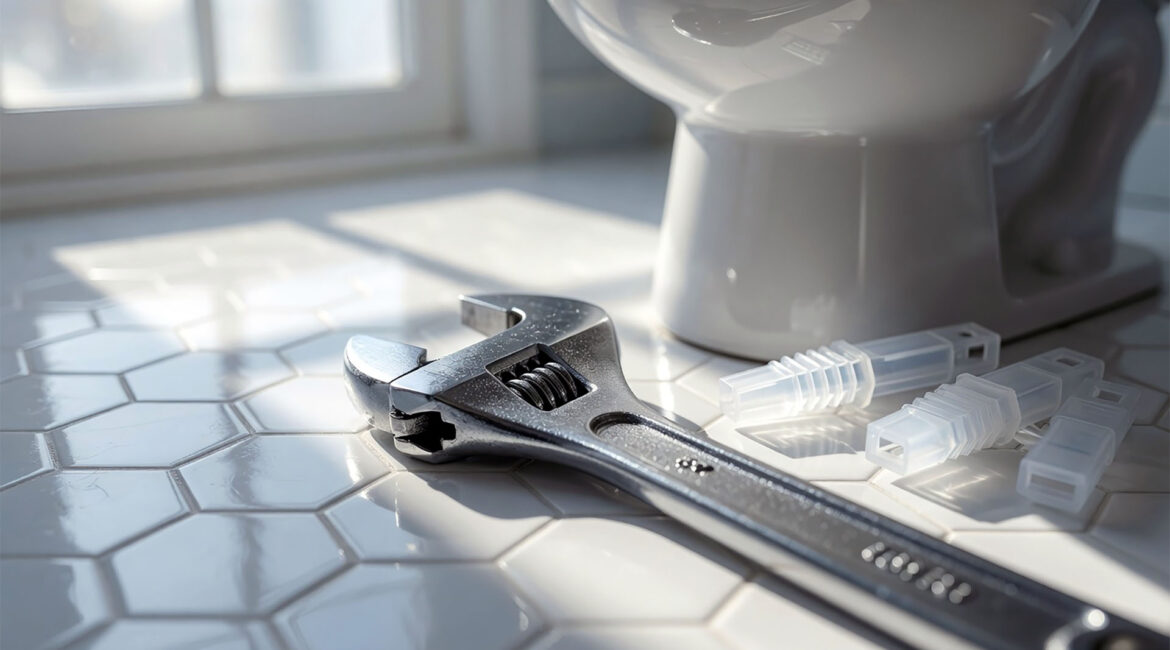
TL;DR: A rocking toilet is usually a quick fix. Tighten the closet bolts first, and if it still moves, add shims and seal the base with caulk. But if you spot water pooling, catch a sewer smell, or the floor feels soft, the wax ring or flange has gone, and that one is a job for a pro.
Key Takeaways
- A wobble is an early warning. Every rock works the seal under the toilet a little more, and that leads to water damage you cannot see.
- Tighten before you shim. Loose bolts are the usual culprit and the easiest thing to fix.
- Use plastic shims, not wood. Wood rots and squashes down. Plastic just stays put.
- Caulk the base, but leave a gap at the back. That gap lets you catch a future leak instead of hiding it.
- Know when to stop. Water at the base or a damaged flange means you are past a simple wobble.
What You’ll Need
- Flat screwdriver
- Adjustable wrench
- Plastic toilet shims
- Utility knife
- Bathroom caulk
Why a Rocking Toilet Is More Than an Annoyance
What is actually moving down there
A toilet should sit dead still. So if yours shifts when you sit down, do not shrug it off. That little bit of movement is the early sign of a problem that gets pricey if you let it ride.
Here is what is going on underneath. Your toilet connects to the drain through a fitting in the floor called the flange, and a wax ring sits between the two to make a watertight seal. Every time the toilet rocks, it works that seal a little looser.
Why it matters
Once that wax ring wears down, water starts seeping out at the base with every flush. The sneaky part is you usually never see it, because it tracks under the toilet and straight into the subfloor.
Give it enough time, and you are looking at soft flooring, stained ceilings downstairs, and rot that costs way more than the toilet ever did. Catching the wobble early is what keeps a fifteen-minute job from turning into a full renovation.
Step One: Find Out Why It Is Rocking
Feel out the wobble
Before you grab a tool, figure out what kind of movement you are dealing with. Press down on opposite edges of the toilet and pay attention to how it shifts.
If it rocks front to back or on a diagonal, it is not sitting level. That is usually an uneven floor or a base that does not sit flush, and a couple of shims will sort it right out.
If the whole toilet lifts at the bolts, you have got a loose toilet on your hands. The bolts holding it down have worked loose or rusted, and that one calls for re-bolting.
Watch for the red flags
Now, if you spot water at the base, catch a whiff of sewer gas, or the floor feels spongy underfoot, the seal has probably already failed. That is a wax ring replacement, not a quick tighten.
Plenty of toilets have more than one thing going on at once, so check for all three before you dive in.
Step Two: Tighten the Closet Bolts First
Get to the bolts
Always start with the easy win. Down at the base, you will see two little caps, one on each side. Pop them off with a flat screwdriver, and the nuts are right there underneath.
Go slow and easy
Tighten each nut a bit at a time, going back and forth between the two sides so you do not pull the toilet crooked. Grab a wrench and take your time with this part.
Porcelain is brittle, and going at it too hard is one of the most common ways folks crack a toilet base. You want snug, not white-knuckle tight. If the wobble disappears, pop the caps back on and call it done.
Step Three: Shim the Gaps
Find the gap
If the bolts are tight but it still rocks, the base just is not sitting evenly on the floor. The answer is shims, those thin tapered wedges made for exactly this. Go with the plastic ones because they will not rot or squash down on you.
Rock the toilet gently and find where the gap opens up. Slide a shim in until the toilet sits firm and dead still. You might need a couple, maybe three.
Finish it clean
Once it is solid, trim the part of each shim you can still see flush with the base using a utility knife. Then run a bead of bathroom caulk around the base, leaving a small gap at the very back.
Pro Tips
- Mark your gaps first. Find every spot that opens up before you start shimming, so you balance the toilet evenly instead of chasing the wobble around the room.
- Snug the bolts in stages. Little turns, alternating sides. It keeps the pressure even and saves the porcelain.
- Never close up that back gap. Seal the base all the way around, and you just trap a leak where you will never spot it.
When the Wax Ring Has Failed
This is a bigger job
Shimming and re-bolting only work if the seal is still good. If you found water pooling, a sewer smell, or a floor that flexes, the wax ring needs replacing, and that means lifting the toilet off the floor.
A confident homeowner can absolutely pull this off, but be warned, it is a real step up. You shut off the water, drain and disconnect the tank, lift the toilet off, scrape away the old wax, check the flange, and set it all back square.
The flange is the catch
The flange is what trips most people up. If it is cracked, sitting below the floor, or corroded, a fresh wax ring on its own will not seal, and you are right back where you started.
When to Call Us
If a nut just spins forever and never grabs, the bolt or flange is shot, and forcing it only makes things worse. That is your cue to put the wrench down.
The same goes if you lift the toilet and the flange looks broken or sits below the tile. A flange repair done wrong leaks quietly for months. We handle flange repairs and reseats all over South Surrey, White Rock, and Langley, and getting it right the first time beats paying to fix water damage later.
The Bottom Line
A toilet that rocks from loose bolts or an uneven floor is an easy hour of work. Tighten gently, shim the gaps, caulk the base, and you are set.
The one thing worth keeping an eye on is the seal. A wobble is a quick fix, but a leak is a whole other story, so do not let one turn into the other.
If you are in South Surrey, Surrey, White Rock, or Langley and the wobble turns out to be more than a quick tighten, contact us, and we’ll get it sealed, solid, and sitting still.