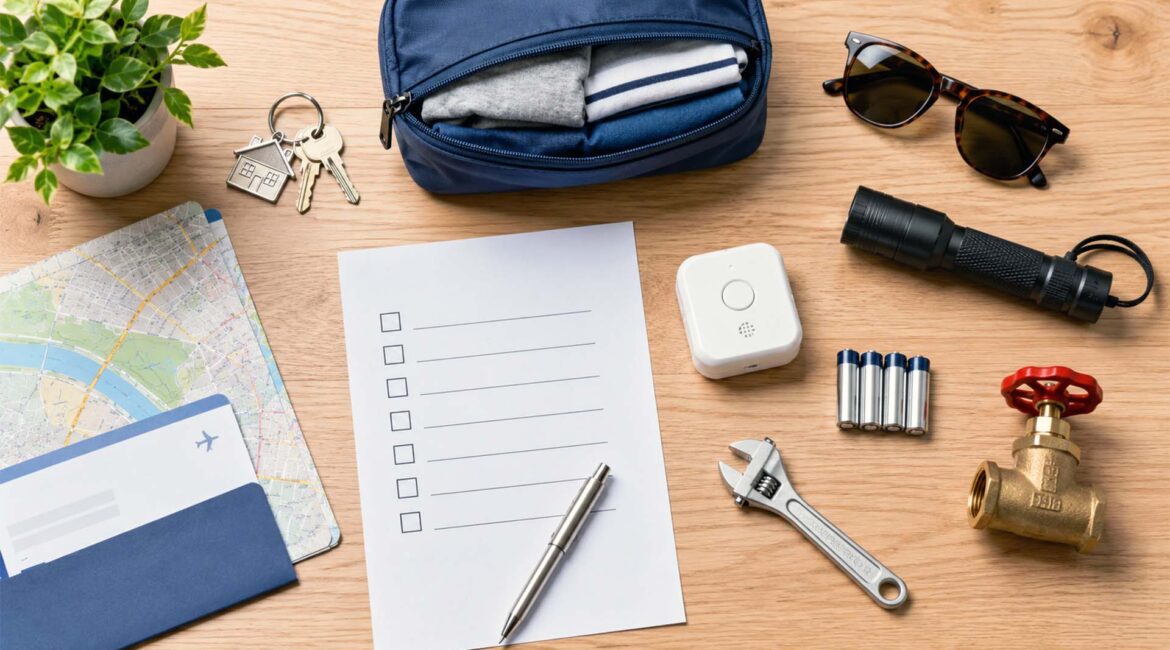
TL;DR: A small leak can run for days while you are away, and the damage grows every hour. Before any summer trip, close the main water shut-off valve, set your water heater to vacation mode, and work through the seven checks below. Ten minutes of prep protects your home until you are back.
Table of Contents
- Why Vacation Plumbing Checks Matter
- Step 1: Close the Main Water Shut-Off Valve
- Step 2: Set the Water Heater to Vacation Mode
- Step 3: Check Supply Hoses and Shut-Off Valves
- Step 4: Fix Running Toilets and Silent Leaks
- Step 5: Protect Your Drains
- Step 6: Shut Down Outdoor Water
- Step 7: Set Up Your Backup Plan
- When to Call Us
- The Bottom Line
Why Vacation Plumbing Checks Matter
A leak in an empty house does more damage than almost anything else. Nobody is home to hear the drip or shut off the water. A supply hose that splits on day one of a two-week trip runs full pressure until someone finds it.
The slow drip nobody fixes turns into the drywall job that costs ten times more. That risk grows when the house sits empty. The seven steps below take about ten minutes and cover every common failure point.
They cover the whole system, from the main valve at the street side to the taps in the garden. Work through them in order the day before you leave, not on the way out the door.
Step 1: Close the Main Water Shut-Off Valve
Where to Find the Valve
The main shut-off valve is the single most important vacation check. Closing it cuts water to the whole house, so a failed hose or fitting cannot flood anything. Find it near your water meter, in the crawlspace, the garage, or where the water line enters the home.
How to Test It
Turn the valve clockwise until it stops, then open a tap to check the flow dies. If the valve is stiff, rusty, or spins without closing, do not force it. A seized main valve is a repair job. It needs to work before you leave, not after.
Pro Tip: Tag the valve with a bright label or zip tie. Anyone checking on your house can find it in seconds during an emergency.
Step 2: Set the Water Heater to Vacation Mode
What Vacation Mode Does
Vacation mode keeps the tank warm without heating water nobody will use. Most gas and electric tanks have a setting marked VAC or Vacation on the control dial. It saves energy and gets back to normal fast when you get home.
What Not to Do
Do not drain the tank or shut off its cold-water feed for a short trip. Follow the manual for your model. Settings differ between gas, electric, and tankless units. If your manual is long gone, the maker’s website lists the steps for each model.
Step 3: Check Supply Hoses and Shut-Off Valves
Which Hoses to Check
Supply hoses cause most vacation floods. Check the washing machine hoses, the dishwasher line, and the small supply lines behind every toilet and sink. Rubber hoses that bulge, crack, or feel stiff are ready to fail.
Upgrade to Braided Stainless
Braided stainless steel lines cost little and outlast rubber by years. While you are down there, turn each small shut-off valve. Make sure each one moves freely. A valve that will not turn is no valve at all.
Those small valves let you shut off one fixture without cutting water to the house. They matter most on long weekends when you leave the main open for a house sitter.
Pro Tip: Hoses have a service life. If you cannot remember installing a hose, it is old enough to replace.
Step 4: Fix Running Toilets and Silent Leaks
The Food Colouring Test
A running toilet wastes water around the clock. A worn flapper is the usual cause. Put a few drops of food colouring in the tank and wait fifteen minutes without flushing. Colour in the bowl means the flapper is leaking.
Swap the Flapper
Most flappers take ten minutes to swap. Our step-by-step flapper guide walks you through it. Fix it before you travel. The fix takes less time than the waste it stops. That guide is one of the most-read pages on this site for a reason.
Check Under the Sinks
A silent leak that runs for two weeks adds up fast on the next water bill. While you are at it, check under every sink with a dry hand. Feel the fittings and the trap. A leak you can feel today is a stain you will see next month.
Step 5: Protect Your Drains
Fill the Drain Traps
Dry drain traps let sewer gas into the house. Empty homes dry out fast in summer heat. Pour a litre of water into floor drains, guest bathroom sinks, and any fixture you rarely use. The water refills the trap and blocks the odour.
Clear the Stoppers
Clear hair and debris from stoppers so nothing sits and smells while you are gone. Run the kitchen tap for a minute to flush the line. You want to come home to fresh air, not a mystery smell.
Step 6: Shut Down Outdoor Water
Close the Hose Bibs
Outdoor taps and sprinkler lines face the highest demand of the year in July. Close the shut-off for each hose bib if your home has one, and disconnect garden hoses. A hose left under pressure in the sun strains the tap and the line behind it.
Reduce the Sprinkler Schedule
Set your sprinkler timer to a lighter schedule or pair it with a rain sensor. Some South Surrey streets run water pressure above 620 kPa (90 psi). That pressure peaks overnight when demand drops. Outdoor fittings feel that strain first.
If your outdoor tap already drips, fix it before the trip. Our outdoor faucet repair guide covers the common causes and the fixes you can handle.
Pro Tip: Photograph your water meter before you leave and again when you return. Any movement with the house empty points to a leak.
Step 7: Set Up Your Backup Plan
Place Smart Leak Detectors
A smart leak detector is cheap insurance for your whole plumbing system. Place sensors under the water heater, behind the washing machine, and under the kitchen sink. Some models close the main valve on their own the moment they sense water.
Ask a Neighbour to Check In
Give a neighbour or friend a key. Ask for a walk-through every few days. Leave them our number, (604) 897-4989, so a small problem gets fixed before it grows. A person on site beats any gadget when something goes wrong.
Ask them to run a tap and flush a toilet on each visit. Moving water keeps the traps full. It also gives them a natural moment to spot anything off.
When to Call Us
Some checks turn up problems that need a licensed plumber before you travel. Call us if you find any of the following:
- A main shut-off valve that is seized, rusty, or will not fully close.
- Poly B piping anywhere in the home. It carries extra risk while the house sits empty.
- Signs of a hidden leak: meter movement, damp spots, or a musty smell.
- A water heater near the end of its life or showing rust at the base.
Anything past the shut-off valve is licensed-trade territory. That line exists to protect your home and your insurance coverage. Call us at (604) 897-4989 and we will sort it before you leave.
The Bottom Line
Ten minutes of prep beats two weeks of worry. Close the main valve, set the water heater to vacation mode, and check the hoses, toilets, drains, and outdoor taps. Add a leak detector and a trusted neighbour, and your home is covered from every angle.
Every step on this list either stops water from moving or catches it the moment it does. That is the whole game while a house sits empty.
Heading out for more than a weekend this summer? Book a pre-trip plumbing inspection. Call us at (604) 897-4989, and we will test the main shut-off, the supply lines, and the water heater. Then you can lock the door and forget about it. weekend this summer?
Book a pre-trip plumbing inspection. Call us at (604) 897-4989, and we will test the main shut-off, the supply lines, and the water heater. Then you can lock the door and forget about it.