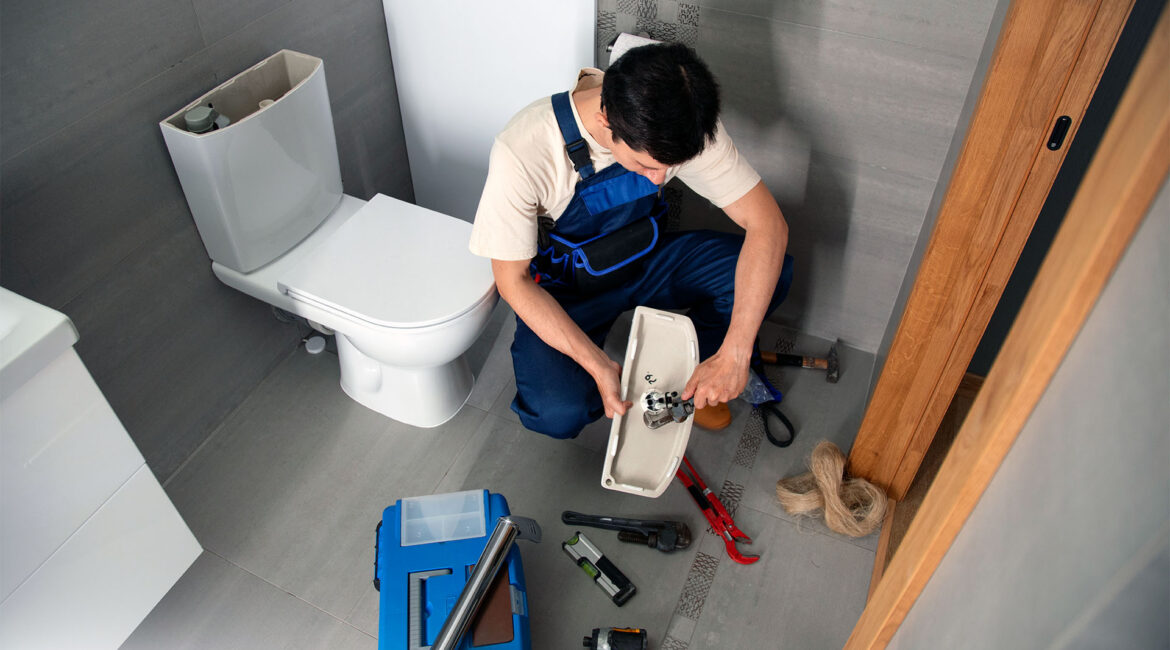
After helping thousands of Surrey families with toilet repairs over 20+ years, we’ve noticed something interesting. Most toilet problems start small – a slight wobble, an occasional double flush, or water that runs a few seconds too long. These warning signs typically appear months before the midnight emergency call. Here’s the good news: a simple 30-minute tune-up twice a year prevents about three-quarters of toilet failures.
Most homeowners don’t realize their toilet is actually pretty straightforward. Think of it like a simple machine with just a few moving parts – all working together to fill, flush, and refill. Over the years, we’ve found that regular maintenance takes less time than brewing a pot of coffee and saves hundreds compared to emergency repairs.
What You’ll Need
Before diving in, gather these basic supplies (you probably have most already):
- Adjustable wrench
- Screwdriver (flathead and Phillips)
- Toilet bowl cleaner
- White vinegar
- Old towel or sponge
- Replacement flapper (about $5-10, just in case)
- Food coloring (optional, for leak testing)
Step 1: Check for Leaks (5 minutes)
Start with the easiest check – the food coloring test. We’ve used this method for decades because it works. Remove your toilet tank lid and add a few drops of food coloring to the tank water. Don’t flush. Wait about 10 minutes while you move on to other steps.
If colored water appears in the bowl without flushing, you’ve got a leak between the tank and bowl. This usually means the flapper needs replacing. A leaking flapper can waste thousands of litres annually – we’ve seen water bills drop by half after fixing this simple issue.
Step 2: Inspect and Clean the Flapper (8 minutes)
Turn off the water supply valve (usually located behind the toilet near the floor). Flush to empty the tank. Now examine the flapper – that rubber seal at the bottom of the tank.
Run your finger along the flapper’s edge. Feel any cracks, warping, or mineral buildup? These prevent proper sealing. If it feels rough or damaged, replacement takes about five minutes. If it just needs cleaning, wipe it down with vinegar to remove mineral deposits.
While you’re in there, check the chain length. It should have just a slight bit of slack – not too tight (prevents sealing) or too loose (gets caught under the flapper). Adjust as needed.
Step 3: Adjust Water Level (5 minutes)
Turn the water back on and let the tank refill. The water should stop about 2.5 cm (1 inch) below the overflow tube’s top. Too high wastes water; too low gives weak flushes.
Most toilets have either a float ball on an arm or a float cup that slides up and down. For float balls, gently bend the arm down to lower the water level, and up to raise it. For float cups, look for an adjustment screw or pinch the clip to slide the float up or down.
We’ve noticed homes in areas with hard water need this adjustment more frequently. Mineral buildup affects how components move, so quarterly checks make sense if you see white residue on fixtures.
Step 4: Clean Rim Jets and Siphon Jet (7 minutes)
Those small holes under the toilet rim? They direct water for effective flushing. When clogged with minerals, you get weak, incomplete flushes.
Pour white vinegar into the overflow tube (the tall pipe in the tank). This flows through rim jets, dissolving buildup naturally. Let it sit while completing other steps, then flush to rinse.
For the siphon jet (the larger opening at the bottom of the bowl), use a small mirror to check for buildup. Clean with a toilet brush or carefully with a wire coat hanger if needed.
Step 5: Test and Tighten (5 minutes)
Check the toilet’s stability by gently rocking it. Any movement means loose bolts at the base. Tighten these carefully – over-tightening can crack the porcelain. Snug is enough.
Test the handle operation. If you need to jiggle it to stop running water, the handle mechanism needs adjustment. Usually, tightening the handle nut inside the tank solves this.
Finally, do a few test flushes. Water should swirl forcefully, the bowl should empty completely, and refilling should stop cleanly without running.
When to Call a Prof
While most tune-up tasks are simple, some signs indicate bigger issues: cracks in the porcelain, persistent running despite new parts, water around the toilet base, or frequent clogging even after cleaning. These typically need professional attention.
Your Maintenance Schedule
Mark your calendar for tune-ups every six months – maybe when clocks change. Takes half an hour, prevents most problems, and keeps your toilet running efficiently for years. We’ve seen well-maintained toilets for decades, while neglected ones need replacing in under ten years.
Regular maintenance might not be exciting, but neither is an emergency plumber visit. Spend 30 minutes now, save hundreds later. Your future self will thank you.
Key Takeaways
- A 30-minute toilet tune-up twice yearly prevents about 75% of toilet failures
- The food coloring test quickly reveals tank-to-bowl leaks that waste thousands of litres
- A faulty flapper is the most common cause of running toilets and high water bills
- The proper water level should be about 2.5 cm (1 inch) below the overflow tube
- Clean rim jets with white vinegar for stronger, more efficient flushing
- Tighten base bolts carefully – snug is enough, over-tightening cracks porcelain
- Schedule tune-ups when clocks change for easy remembering
- Well-maintained toilets last decades; neglected ones need replacing in under 10 years