TL;DR: You can clear most kitchen sink clogs without chemicals using hot water, a plunger, baking soda and vinegar, or by cleaning the P-trap. Start with the gentlest method and work up. If water still backs up after the trap is clean, the blockage sits deeper and is worth a call.
Key Takeaways
- Skip the chemical drain cleaners. They can damage pipes and pose a splash risk.
- Hot water on its own clears soft grease and soap clogs in a lot of sinks.
- A cup plunger builds pressure that can pop a clog loose in minutes.
- Baking soda and vinegar help, but the hot-water flush does most of the work.
- Cleaning the P-trap is the real fix when the easy stuff doesn’t cut it.
- A drain snake reaches blockages further down the line.
- A few daily habits keep grease and food out of the drain for good.
What causes a kitchen sink to clog?
Most kitchen clogs come down to the same few culprits. Grease and cooking oil cool inside the pipe and harden into a sticky film. Then food scraps, coffee grounds, and starchy bits like rice or pasta cling to it.
Over time, the drain narrows until the water slows to a trickle. The good news? A soft clog near the top usually clears with stuff you already have at home. You only need the heavier methods when the blockage sits deeper in the line.
Why skip the chemical cleaners?
Those store-bought drain cleaners are easy to grab, but they come with trade-offs. The harsh ingredients can eat away at older pipes and rubber seals, especially in homes with aging plumbing. They also sit in the trap as caustic liquid, which is a splash and fume hazard while you work.
Here’s the other catch. If the cleaner doesn’t clear the clog, you’re left with a pipe full of dangerous liquid. The next method then has to work around it. Everything below clears the same clogs with heat, pressure, and a bit of elbow grease. It’s gentler on your pipes, safer around kids and pets, and costs next to nothing.
Five ways to clear it without chemicals
Work down this list in order. Start gentle, and only reach for the next method if the water’s still pooling.
1. Flush it with hot water
Hot water is the easiest first move. Boil a full kettle, then pour it down the drain in two or three goes, pausing a few seconds between each pour. The heat softens the grease so it can wash through.
One heads-up: if you’ve got plastic (PVC) pipes, use very hot tap water instead of a rolling boil. Boiling water can soften plastic joints over time. For metal pipes, straight off the boil is fine.
If the water runs better afterward, you’ve likely cleared a soft grease clog. If it still pools, move on.
2. Use a plunger
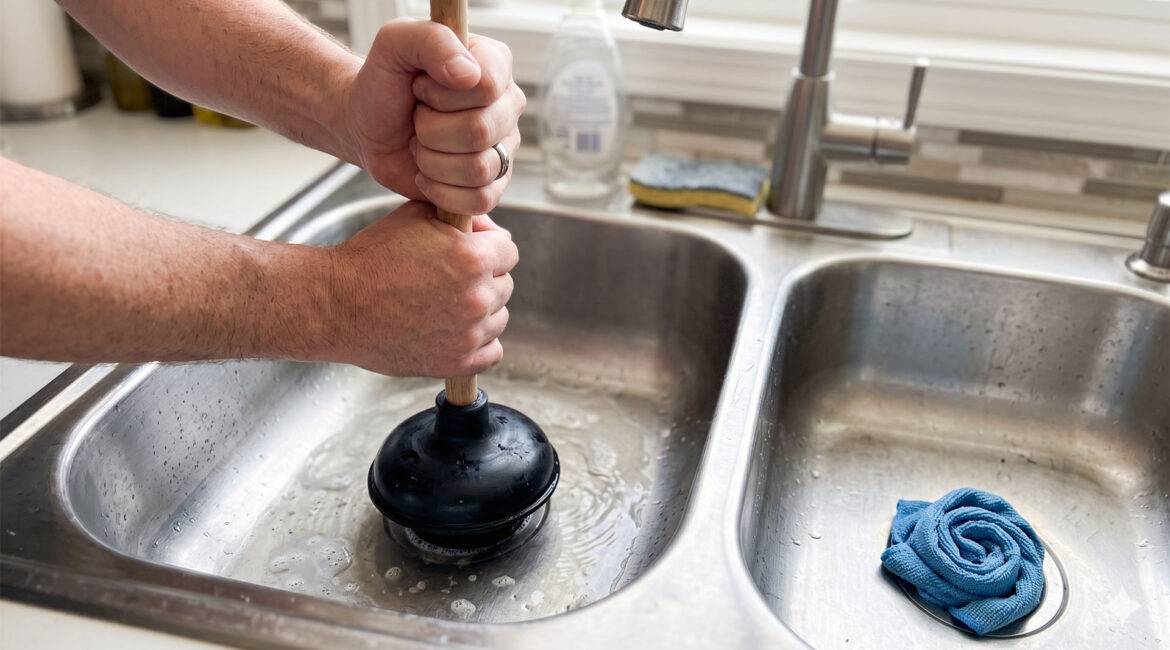
A plain cup plunger works on sinks too, not just toilets. Fill the basin with enough water to cover the rubber cup. Got a double sink? Plug the second drain with a wet cloth so the pressure has nowhere else to escape.
Set the cup flat over the drain and plunge firmly 15 to 20 times. That push and pull builds pressure that can break a clog loose. Run the tap to see how you did, then go again if you need to.
Pro Tip: Smear a thin ring of petroleum jelly around the rim of the cup. It seals better and makes every push count for more.
3. Try baking soda and vinegar
This old standby helps, though it’s gentler than most people expect. Pour 125 mL (half a cup) of baking soda down the drain, then 250 mL (1 cup) of white vinegar. You’ll hear it fizz. Let it sit for 15 minutes, then flush with hot water.
Just be realistic about what it’s doing. The fizzing loosens light residue, but the hot-water flush afterward does the real work. Think of it as upkeep, not a rescue for a fully blocked drain.
4. Clean out the P-trap
The P-trap is that curved pipe under your sink. It catches debris, so it’s often exactly where a stubborn clog is hiding. This is the step that sorts out what the easy methods can’t.
Here’s how:
- Put a bucket under the trap to catch the water.
- Unscrew the two slip nuts by hand, or with pliers if they’re tight.
- Pull the trap free and clear out any grease, food, or gunk.
- Rinse it in another sink, then reattach it snugly.
- Run the tap and check the joints for leaks.
Pro Tip: Snap a quick photo of the pipes before you take anything apart. It makes putting them back in the right order so much easier.
5. Reach further with a drain snake
If the trap’s clean and water still backs up, the clog is sitting deeper in the line. A hand-cranked drain snake, also called an auger, can reach it. You can rent or buy one cheaply.
Feed the cable in until you hit resistance, then crank to push through or hook the clog and pull it out. Go slow so you don’t scratch the pipe. If the cable starts bending back on itself, pull it out and feed it in again more gently. Flush with hot water when you’re done.
How do you keep it from clogging again?
Honestly, prevention beats every method on this list. A few simple habits keep your drain clear:
- Never pour grease or oil down the sink. Let it cool and bin it instead.
- Scrape plates into the compost or garbage before you rinse.
- Run hot water for a few seconds after washing greasy dishes.
- Drop a mesh strainer over the drain to catch food scraps.
Build these into your routine, and you might rarely touch a plunger again.
When to Call Us
Some clogs are a sign of something bigger. Call a plumber if water backs up into a second sink. Same story if more than one drain is slow at once, or if you catch a sewage smell. That usually means a blockage deeper in the main line, not the sink itself.
It’s also worth a call if the clog keeps coming back after you clear it. A repeat clog often means grease has built up along a long run of pipe, or a section needs a proper cleaning. We help homeowners across South Surrey, White Rock, and Langley sort these out fast.
Stuck with a kitchen drain that won’t stay clear? Call us at (604) 897-4989, and we’ll get your sink running again.