Atmospheric river prep BC | Is your plumbing ready?
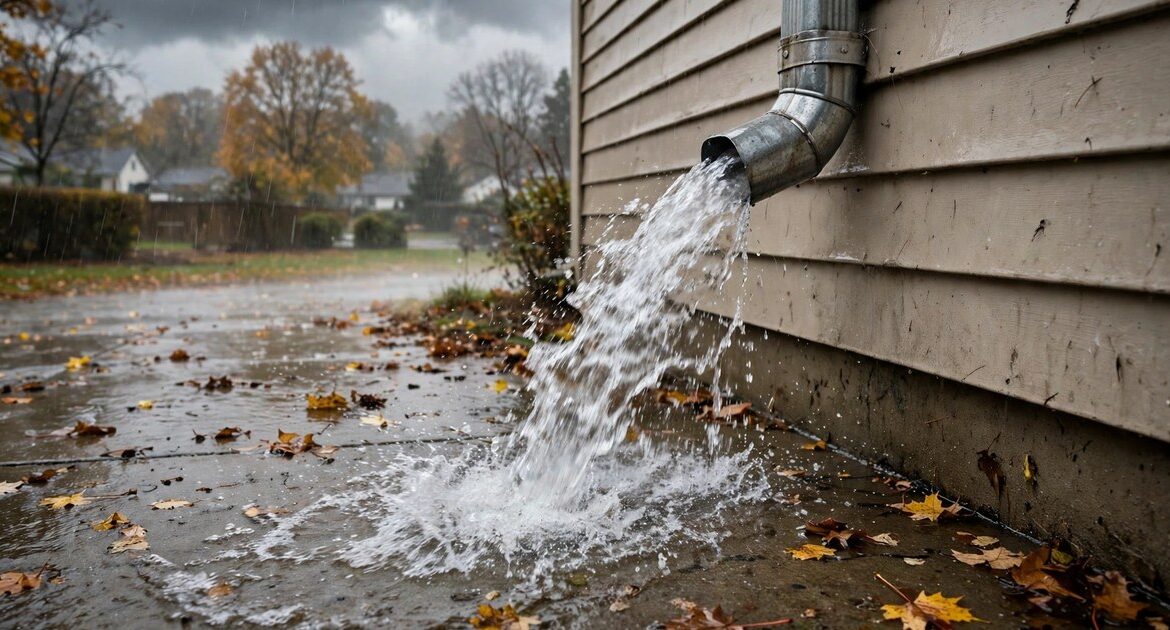
Here is the thing about fall in BC: the rain does not arrive politely. When an atmospheric river parks over the Lower Mainland, South Surrey and White Rock can take a month of rain in a few days. Your roof handles most of it. Your plumbing handles the rest.
The short version: test the sump pump, clear the gutters and drains, find the shut-off valve, and drain the outdoor taps. Most of it is easy Saturday work. A few jobs belong to us. Here is the full walkthrough.
Test your sump pump before the rain starts
Nobody thinks about their sump pump until the basement is wet. Let us keep it that way. If you have a basement or crawl space, this is the single most important check on the list.
The bucket test takes five minutes:
- Pour a bucket of water into the pit until the float rises.
- The pump should kick on, drain the pit, then shut itself off.
- Listen while it runs. Grinding or rattling usually means a worn or jammed impeller.
- Check the discharge line outside. It should be clear, not kinked, crushed, or buried under leaves.
- Point the discharge well away from the foundation, or the pump just recycles the same water.
If the pump hums without pumping, runs without stopping, or does nothing at all, fix it before the rain, not during it. Here is our five-minute sump pump check for a refresher, plus what to look at when your sump pump is not working.
One more thing: fall storms knock out power. A battery backup keeps the pump running when the grid does not. Test it by unplugging the pump and pouring water into the pit, then plug it back in. If anything fails, this is the right time to get a free quote on a repair or replacement.
Clear gutters, downspouts and perimeter drains
Water sitting against your foundation is a plumbing problem, not just a yard problem. Here is what to check:
- Gutters: scoop them clean so water can actually flow.
- Downspouts: each one should carry water at least a couple of metres from the house. Splash blocks or flexible extensions are cheap and do the job, as long as they slope away from the house.
- The perimeter: after the next heavy rain, walk around and look for pooling water or damp spots on basement walls.
A downspout that dumps beside the foundation feeds your perimeter drains around the clock during a storm. Our three checks for perimeter drain problems show exactly what to look for. Older homes in the area sometimes still have clay tile drains, which crack and fill with roots over the decades. It is worth knowing the signs your weeping tile has failed.
Diagnosing a perimeter drain means cameras and digging, so this one is ours, not yours. If your checks turn up something worrying, ask us for a free quote and we will take a proper look.
Check window wells and area drains
Basement window wells collect leaves fast in October. A clogged well turns into a little pond against your window, and that water will find its way in. The fix is simple:
- Scoop out the leaves and debris.
- Confirm the drain at the bottom of the well runs clear.
This DIY window well drain check takes about ten minutes per window.
Do the same for area drains on patios, walkways and driveways. Hose them clear while the weather is still decent. A leaf blower on low clears surface debris fast, but follow it with the hose to flush the grate itself. If a drain gurgles or empties slowly, the blockage may be deeper than a hose can reach.
Find your main water shut-off valve now
You do not want to meet this valve for the first time during an emergency. Find it on a calm Saturday instead. It is usually near the front of the house where the water line enters, or out at the meter.
- Turn it a quarter turn, then back, to confirm it still moves.
- Label it so everyone in the house knows what it is.
- If it will not budge, have a plumber replace it before the day you need it.
Valves that sit untouched for years can seize. Ten seconds with a label can prevent thousands in water damage. Got a separate shut-off for irrigation? Close that one too. Irrigation lines freeze first because they sit shallow in the ground.
Winterize outdoor taps before the cold follows
Atmospheric rivers bring the rain. The cold air behind them brings frost. Twenty minutes now prevents one of the most common winter repair calls we see:
- Shut off the interior valve feeding each outdoor tap.
- Open the outside tap to drain the line, and leave it open for winter.
- Disconnect every hose and store it inside. A connected hose traps water, and trapped water splits pipes when it freezes.
- Drain irrigation lines and shut off the supply to outdoor showers or pool equipment.
Frost-free sillcocks still need the hose removed to work properly. The full walkthrough is in our guide to winterize your hose bib in four steps.
Watch for early signs of sewer trouble
Heavy rain stresses sewer lines, and tree roots chase that moisture all fall. Older clay or concrete lines are the most vulnerable. If you spot any of these, call or text us at (604) 897-4989:
- Several drains running slow at the same time
- Toilets gurgling on their own
- Sewage smells in the basement
One slow drain is usually a local clog. Several at once points to the main line, and that is a camera job for a licensed plumber. Do not wait for a backup to confirm it. A camera inspection now costs far less than a cleanup later.
If your home has a backwater valve, check that the access cover is reachable and the flap moves freely. Leaves and grit can jam it open, which defeats the purpose.
One more fall job: your water heater works its hardest in the cold months. If yours is popping, rumbling or hissing, read our guide to water heater noises before winter sets in.
Know when to call a licensed plumber
Your list (Saturday work):
- Testing the sump pump
- Clearing gutters, window wells and area drains
- Draining outdoor taps and irrigation lines
- Finding and labelling the shut-off valve
Our list (call a licensed plumber):
- Anything inside a wall, under a slab, or tied to the main sewer line
- Perimeter drain diagnosis, pump replacement, valve replacement
- Sewer camera inspections
Not sure which list a job belongs on? Just ask. Call or text us at (604) 897-4989 Monday to Friday, or request a free quote through the contact page. We will tell you honestly whether it is a DIY fix or one for us.
Atmospheric river season in BC runs roughly October through December. An hour of prep now beats a flooded basement later. Work through the list, and if anything fails its test, reach out before the next storm. We serve South Surrey, White Rock and Langley.
Storm prep questions we hear a lot
When is atmospheric river season in BC?
Roughly October through December, with the heaviest systems usually arriving in October and November.
How do I know if my sump pump works?
Pour a bucket of water into the pit. The pump should turn on, drain the pit, and shut itself off. If it does not, fix it before the rain.
Can I prep my plumbing for storm season myself?
Most of it, yes. Testing the sump pump, clearing gutters and drains, and draining outdoor taps are all DIY-friendly. Perimeter drains, pump replacement and sewer camera work belong to a licensed plumber.
What is the first thing to check before a big storm?
The sump pump. It is the one fixture standing between a storm and a flooded basement.