TL;DR
Test your sump pump every three months, with an extra check before fall. It takes five minutes and a bucket of water. That’s the best free basement insurance you can set up.
Key Takeaways
- Quarterly testing is the minimum, with monthly checks during the wet season
- The Pacific Northwest climate is rough on sump pumps
- A 5-step test using one bucket of water catches most problems early
- Some failures need a licensed plumber, not a DIY fix
- A backup pump is worth it if your basement is finished or full of valuables
- Quick FAQs at the end cover lifespan, cleaning, dry-weather cycling, and pump types
Why Quarterly Testing Beats Annual Testing
Here’s the thing about sump pumps: they sit there doing nothing for weeks at a time, then they’re suddenly expected to perform flawlessly during the worst storm of the year. That gap is exactly what causes most failures. Floats stick when they don’t move. Seals dry out. GFCIs trip and stay tripped, and nobody notices until water’s already on the floor.
If you live in South Surrey or White Rock, four checks a year is the sweet spot:
- January: After winter rain has stress-tested the system
- April: Coming out of the wet season, looking for wear
- July: Before late-summer storms or your vacation
- October: Before the rain really starts (this is the big one)
If your home sits low or your pump runs often during the wet months, switch to monthly checks from November through March.
Pro Tip: Stick a recurring calendar reminder on the first weekend of every quarter. Pair it with your smoke detector battery checks so you only have to remember one rhythm.
Why the Local Climate Makes This More Urgent
Sump pumps matter everywhere. But living here? The deck’s stacked against them. Saturated soil sits high against foundations for months. Atmospheric rivers dump serious rain in short bursts. Power outages tend to happen during the worst of it.
When a sump pump fails, you usually find out the hard way. The good news? Almost every failure shows up as a small symptom days or weeks before the actual breakdown. Quarterly testing is how you catch those symptoms while they’re still cheap to fix.
The 5-Minute Sump Pump Test
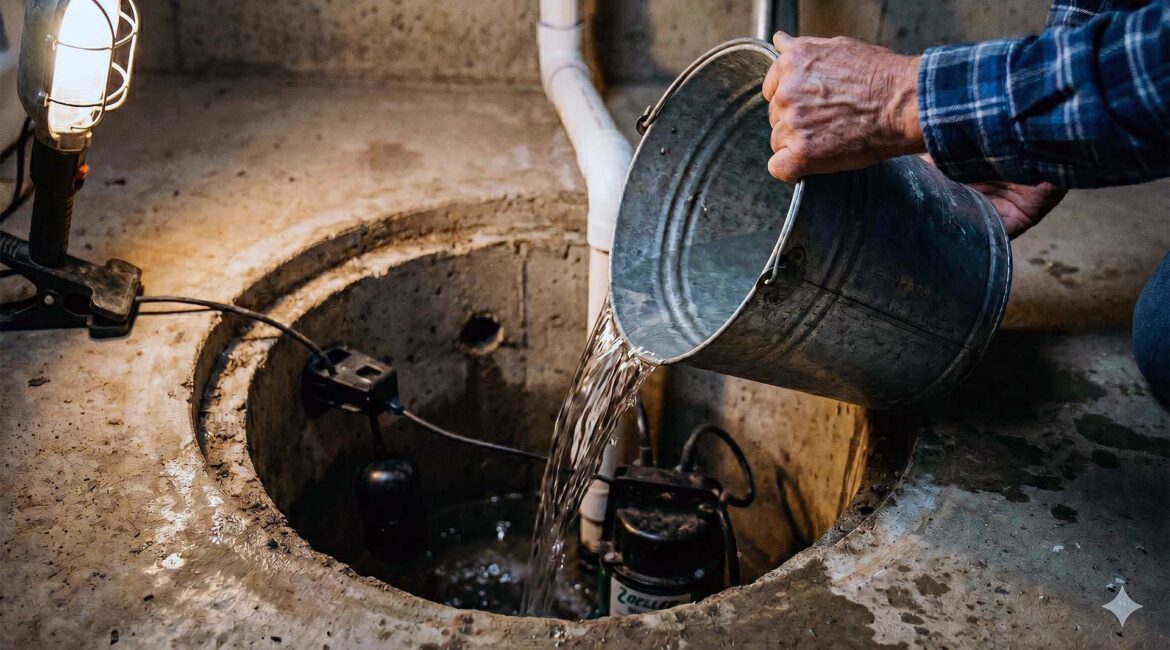
You’ll need a five-gallon bucket of water and a flashlight. That’s it.
1. Check the power (30 seconds)
Make sure the pump is plugged in, and the GFCI outlet hasn’t tripped. If you’ve got a battery backup, check the indicator light. You’d be amazed at how many “failed” pumps are just unplugged because someone needed the outlet for a vacuum and forgot.
2. Look inside the pit (1 minute)
Pull off the cover, shine your flashlight in, and look for debris, gravel, or sludge that could jam the float. The water level should sit below the float trigger. If the pit is bone dry and dusty, that’s a flag too. It might mean the pump isn’t cycling at all.
3. Pour the water in (1 minute)
Slowly pour your bucket into the pit and watch the float rise. The pump should kick on automatically once the float hits its trigger point.
4. Listen and watch (2 minutes)
A healthy pump sounds like a smooth electric motor. No grinding, no rattling, no screeching. Watch the water level drop. It should empty the pit in 10 to 20 seconds, then shut off cleanly when the float drops back down. If it short-cycles or keeps running dry, something’s off.
5. Check the discharge outside (30 seconds)
Walk outside and make sure water’s actually coming out of the discharge pipe. In winter, check that the line isn’t frozen or buried under landscaping. Water should flow at least 1.5 to 2 metres away from the foundation.
Pro Tip: Record a short video of a healthy test cycle the first time you do this. Next quarter you’ll have a baseline to compare sound and timing against. Tiny changes are the earliest warning of a worn motor.
DIY or Call a Pro?
The 5-minute test handles routine maintenance just fine. But some problems need a licensed plumber the same day, especially heading into wet season.
Give us a call if any of these show up during your test:
- The pump won’t start when the float rises
- You hear loud grinding, rattling, or buzzing
- Water drains slowly or backs up into the pit
- The pump runs, but no water comes out of the discharge
- You see rust, cracks, or an oil sheen in the pit
- The pump is older than 7 years
That last one matters. Most residential sump pumps last 7 to 10 years. If yours is in that range and the test turns up anything weird, replace it before it fails on the wrong night.
A Word on Backup Systems
If your basement is finished, or you’ve got anything valuable down there, a backup pump is worth a serious look. Battery-powered and water-powered options both work well.
Power outages in South Surrey and White Rock tend to hit during the exact storms that make sump pumps work hardest. A primary pump without a backup is a single point of failure on the worst possible night.
Frequently Asked Questions
- How long do sump pumps last? Most residential sump pumps last 7 to 10 years. Heavy use shortens that range, light use extends it. If yours is older than 7 and starts acting up, plan to replace it before the next storm rather than after.
- Can I test a sump pump without using water? You can do a partial check by lifting the float by hand, but it’s not a real test. Pouring water in is the only way to confirm the float, motor, and discharge are all working together as a system. Skip the bucket and you’re guessing.
- Why does my sump pump run when it isn’t raining? A few possibilities: a high water table, a stuck float, groundwater leaking in near the foundation, or a downspout draining too close to the pit. If the pump is cycling every few minutes during dry weather, it’s worth a closer look.
- Do I need a battery backup for my sump pump? In South Surrey and White Rock, it’s a smart move. Power outages here tend to hit during the same storms that overload sump pumps, and a primary pump without a backup is a single point of failure. If your basement is finished or stores anything you’d hate to lose, a backup is the safer call.
- Should I clean my sump pump pit? Yes, once a year is a good rhythm. Remove debris, gravel, and any sediment built up in the bottom. Wipe down the pump intake screen and check the float for grime. Clean pits run quieter and last longer.
- What’s the difference between a pedestal and a submersible sump pump? Pedestal pumps sit above the pit with the motor exposed, so they’re easier to service and tend to last longer. Submersible pumps sit in the water, run quieter, and handle more debris. Most newer homes in South Surrey use submersibles, while older homes often still have pedestals.
Hand It Off to a Pro
You don’t have to be the one wrangling buckets in the basement every quarter. That’s our job. We handle seasonal sump pump inspections, repairs, and full replacements throughout South Surrey and White Rock. Call us at 604-897-4989, and we’ll take it from here.