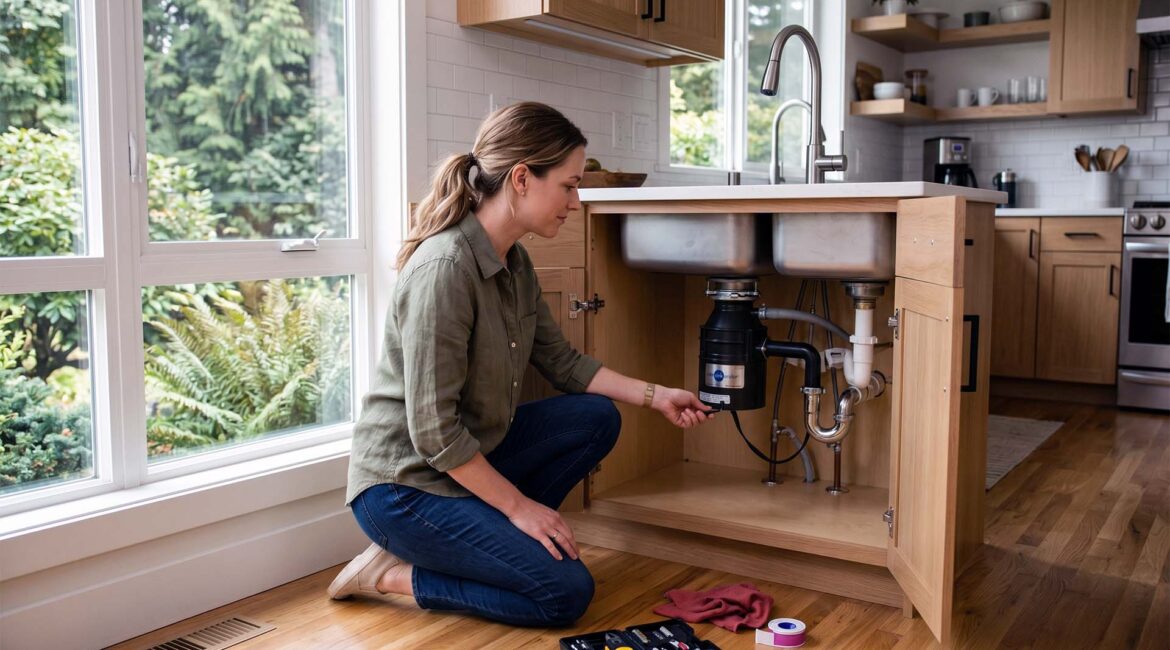
TL;DR: A jammed garbage disposal usually just needs a quick mechanical reset to get the blades spinning again. Fixing most jams takes about 5 minutes by cutting the power, manually turning the hex socket, and pressing the red reset button. Prioritize your safety by keeping your hands completely out of the drain at all times.
Key Takeaways:
- Identifying the sound of a locked motor
- Gathering the right tools for the job
- Cutting the power safely
- Extracting the blockage with metal tools
- Manually turning the hex socket
- Resetting the internal breaker
- Preventing future kitchen sink clogs
- When to call a professional plumber
Identifying the Sound of a Locked Motor
Flipping the switch and hearing a loud, angry hum means the motor has power, but the blades cannot spin. The impeller plate inside the grinding chamber is physically stuck on a piece of food or debris. Leaving the switch on while the unit hums will quickly overheat the electrical components.
Turn the switch off immediately to prevent permanent damage. Recognizing this specific noise is the very first step in diagnosing a mechanical jam. A completely silent disposal usually points to a tripped electrical breaker rather than a physical blockage.
Gathering the Right Tools for the Job
Getting the proper equipment ready beforehand makes this repair fast and stress-free. You will not need any complex plumbing gear to get the blades spinning again. Grab these items before you begin:
- A standard 1/4-inch Allen wrench (also known as a hex key).
- A reliable flashlight or headlamp to see clearly under the sink.
- Long metal kitchen tongs or needle-nose pliers.
- A bucket or thick towel to catch any minor drips.
Keeping these basic tools nearby ensures you can handle the fix without running to the hardware store.
Cutting the Power Safely
Disconnecting the power is the absolute only way to safely troubleshoot any appliance with grinding blades. Unplug the disposal directly from the wall outlet under the sink. Flipping the dedicated breaker at your electrical panel is the best alternative if the unit is hardwired into the home.
Confirming the power is completely off prevents accidental starts while you work. Testing the wall switch one more time after unplugging the unit provides extra peace of mind. Proceeding without this crucial step risks severe injury.
Extracting the Blockage
Items like chicken bones, fruit pits, or dropped utensils cause the majority of disposal jams. Shining a flashlight down the drain will help you spot the exact location of the obstruction. Reach into the drain with long needle-nose pliers or kitchen tongs to firmly grab the stuck item.
Fingers should never go past the rubber drain baffle under any circumstances. Tension stored in the jammed blades can release suddenly, even with the power completely turned off. Using metal tools keeps your hands safe while extracting the debris.
Common Jam Culprits to Avoid
Certain foods belong in the compost bin instead of the sink drain. Avoid putting these specific items down your disposal:
- Fibrous vegetables like celery, corn husks, and artichokes.
- Starchy foods like pasta, rice, and thick potato peels.
- Hard items like bones, fruit pits, and uncracked nuts.
- Coffee grounds and eggshells.
Keeping these materials out of your plumbing system extends the life of the appliance.
Pro Tip: Keep a standard 1/4-inch Allen wrench taped securely to the side of your disposal unit under the sink. Having the exact right tool within reach saves a frustrating trip to the garage during a sudden kitchen jam. This is especially helpful for new homeowners encountering a stuck sink for the first time.
Manually Turning the Hex Socket
The bottom of the disposal motor housing features a small, hexagonal hole right in the centre. Inserting a 1/4-inch Allen wrench into this socket allows you to manually turn the internal mechanisms. Crank the wrench back and forth in both directions with steady pressure.
Resistance is completely normal at first as you force the blades past the blockage. Keep working the wrench back and forth until the socket turns freely in a full 360-degree circle. Breaking the jam manually ensures the motor will not overheat when you turn the power back on.
Resetting the Internal Breaker
Disposals have a built-in circuit breaker to protect the motor from burning out during a severe jam. The small red reset button is located at the very bottom of the unit, usually right next to the hex socket. This button pops outward automatically when the internal breaker trips.
Push the red button firmly back in until it clicks and stays flush with the casing. Waiting ten to fifteen minutes before pressing the button might be necessary if the unit feels hot to the touch. The motor needs adequate time to cool down before the breaker resets properly.
Testing the System
Restoring power is the final step after the blades turn freely and the button is reset. Plug the unit back in or flip the breaker back to the on position at your main electrical panel. Turn on the cold water tap and let it run into the sink for a few seconds. Switch the disposal on to verify it operates smoothly and sounds normal.
Preventing Future Kitchen Sink Clogs
Proper daily usage is the best defense against a locked-up motor. Adopting a few simple habits will keep your plumbing system clear:
- Run cold water for fifteen seconds before and after grinding to push waste through the pipes.
- Feed food scraps slowly in small batches rather than stuffing the drain all at once.
- Grind a few ice cubes once a month to help scour the grinding chamber.
- Avoid using hot water during grinding, as it melts fats that later solidify in the pipes.
When to Call a Pro
Fixing a jam is straightforward, but avoiding a DIY disaster means knowing exactly when a project requires a professional plumber. Stop the leak before it hits the drywall if you notice water pooling under the sink or dripping from the disposal casing. Internal seals naturally degrade over time and cannot be fixed with an Allen wrench.
Replacing the entire unit is usually required if the motor simply hums, but the bottom hex socket absolutely refuses to budge. Professional installation ensures the new disposal connects perfectly to your specific sink flange and drain lines. Proper fitting protects your home from regional plumbing failures across South Surrey, White Rock, and Langley.
The Bottom Line
Most garbage disposal jams are temporary issues caused by hard food scraps or dropped foreign objects. Cutting the power and using an Allen wrench to manually turn the motor will resolve the problem quickly and safely.
Resetting the red breaker button completes the fix and gets your kitchen running smoothly again. Following basic maintenance habits will prevent the majority of future lockups.
Protect your home with South Surrey’s neighborhood plumber. To book a service call, call (604) 897-4989 today.