TL;DR: A running toilet is almost always one of three small parts: the flapper, the fill valve, or the chain. Ten minutes of simple checks tells you which one it is. Most fixes are easy hand work.
Water on the floor, a stuck shut-off valve, or a crack in the porcelain means stop and call a plumber.
You know the sound. You flushed ten minutes ago, and the tank is still hissing as it refills. Or it stops, then starts again at 2 a.m. for no reason.
Either way, water is going straight down the drain while you wait. The good news is that a running toilet is one of the friendliest problems in the house to sort out yourself.
This post walks through the checks in order. Then it shows you exactly where the do-it-yourself line sits.
Why a toilet keeps running
A toilet tank is a simple machine. Water fills the tank and a rubber flapper holds it there. The handle lifts the flapper to flush, and the fill valve refills the tank afterwards.
When any part of that chain wears out, water slips quietly from the tank into the bowl. The fill valve keeps topping it up. That’s the running you hear.
Three parts cause almost every case:
- The flapper, the rubber seal at the bottom of the tank. Rubber gives up after years in water.
- The fill valve, the tall assembly that refills the tank. It can stick or wear with age.
- The chain, which connects the handle to the flapper. It can tangle or slip out of adjustment.
The sound tells you a lot
A toilet that refills by itself for a few seconds now and then is called a phantom flush. Nobody touched it.
The tank is leaking slowly into the bowl, and the valve tops it up each time the level drops. That pattern almost always means the flapper.
A toilet that runs constantly and never quite settles points at the fill valve or the water level. Listen for a steady hiss. That’s water still moving when nothing should be moving.
A toilet that flushes twice, or needs the handle held down, is a different story. The flapper is closing too early or too late, or the chain length is off. Annoying, but that’s an adjustment, not a leak. And if you’d rather not lift the lid at all, this is the right time to get a free quote.
The ten-minute checks
You need almost nothing for these: a towel for drips and food colouring for one test. And a small bucket in case you want to bail the tank. No wrenches, no putty, no special tools.
Pro tip: Take a quick photo inside the tank before you touch anything. If a part shifts or comes off in your hand, the photo shows you exactly how it sat.
Start with the chain. Press the handle firmly and let it snap back. If the running stops, the chain was catching, and you may have just fixed it.
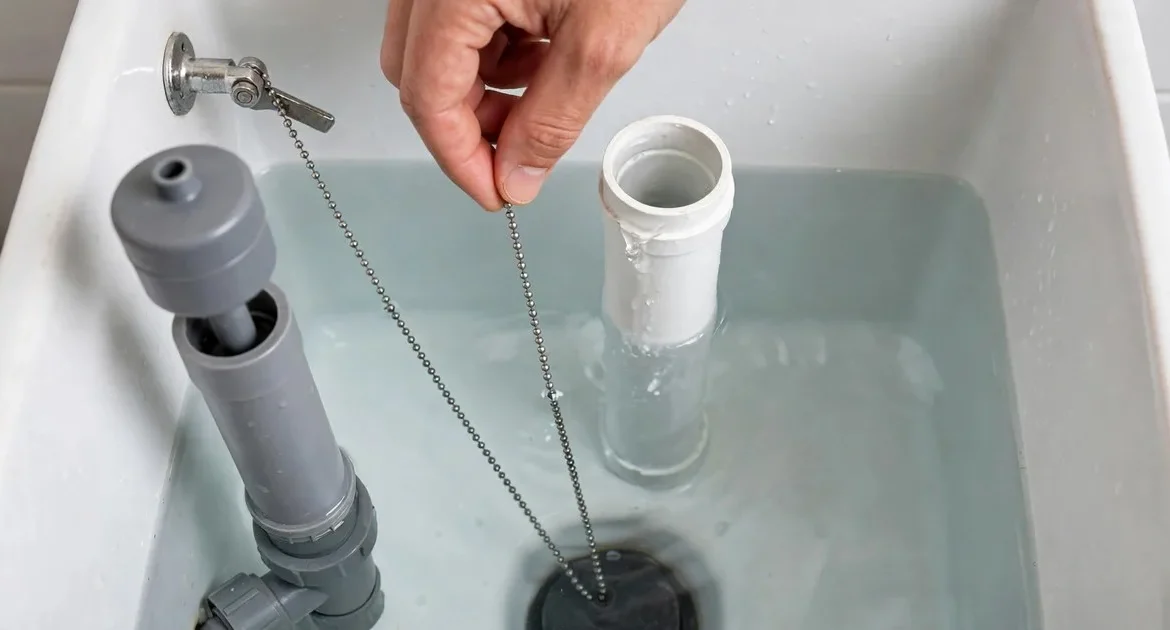
If it keeps going, lift the tank lid and look at the chain with the flapper closed. It should hang with a little slack. A chain pulled tight holds the flapper open a crack.
Check the water level. The water should sit about an inch below the top of the overflow tube. If it’s pouring over the top of that tube, the level is set too high.
Most fill valves adjust with a simple screw or clip on the float.
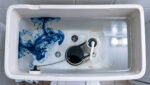
Run the dye test. A few drops of food colouring in the tank, then wait fifteen minutes without flushing. Colour in the bowl means water is slipping past the flapper.
Our full walkthrough of the food colouring toilet test covers the details.
Pro tip: Run the dye test last thing at night. Nobody flushes for hours, so even a slow leak has time to show its colour by morning.
Feel the flapper. Reach in and press the flapper down with two fingers. If the running stops, the seal is the problem.
Run a finger around its edge. A flapper that’s warped, slimy, or crumbling needs replacing, and it’s a parts-in-hand job. If the test points there, our step-by-step flapper replacement guide walks through the swap.
Once you know which part it is, the repair itself is usually a half hour of hand work. Our 30-minute running toilet repair guide has the full walkthrough, start to finish.
Rather skip the checks? Call or text (604) 897-4989 for a free quote, and we’ll find the cause for you.
Where the DIY line sits
Some signs mean the tools stay in the drawer:
- Water on the floor around the base, or a toilet that rocks when you sit down
- A shut-off valve that’s stuck, corroded, or weeping. Forcing a seized valve is how a small job becomes a flood
- Any crack in the tank or bowl
- You’ve replaced the flapper and fill valve and it still runs. The problem is deeper, and guessing further just wastes water
Pro tip: Once a year, gently turn the shut-off valve behind each toilet a quarter turn and back. A valve that never moves is the one that seizes on the day you actually need it.
If one of those is your situation, that’s a call to a licensed plumber. It’s also a job our toilet installation and repair team handles across South Surrey, White Rock, and Langley.
Not sure which side of the line you’re on? You’re welcome to call or text us at (604) 897-4989 and describe what you’re hearing.
We’ll tell you straight if it sounds like a ten-minute fix. If it needs a visit, the quote is free, and we’re around Monday to Friday, 8:00 a.m. to 4:00 p.m.
You can also reach us through our contact page.
Quick questions
Is a running toilet an emergency?
Almost never. It’s a water bill problem, not a safety problem. Shut the supply valve behind the toilet off if the noise is driving you up the wall. Deal with it in daylight.
The exception is water on the floor, which can damage the floor and the ceiling below.
How much water does a running toilet waste?
More than you’d guess. A toilet that refills itself every few minutes is sending treated water down the drain around the clock. It adds up fast on a metered bill.
It’s one of the most common hidden causes of a water bill that suddenly climbs for no clear reason.
Should I just replace the whole toilet?
Usually not for a running problem alone. Flappers and fill valves are wear parts, and replacing them is normal maintenance.
Replacement makes more sense when the toilet is cracked, rocks on its base, or clogs constantly. Or when you’re renovating the bathroom anyway.
Why did it start running right after I fixed something else in the tank?
It happens often. Moving the fill valve or float can change the water level, and a disturbed chain can kink or catch.
Go back to the first two checks above, level and chain, before you buy any more parts.