That grey plastic pipe behind the water heater? It might be the most expensive problem hiding in plain sight. Poly B piping went into millions of homes between 1978 and 1998, and it’s earned a reputation for failing without much warning.
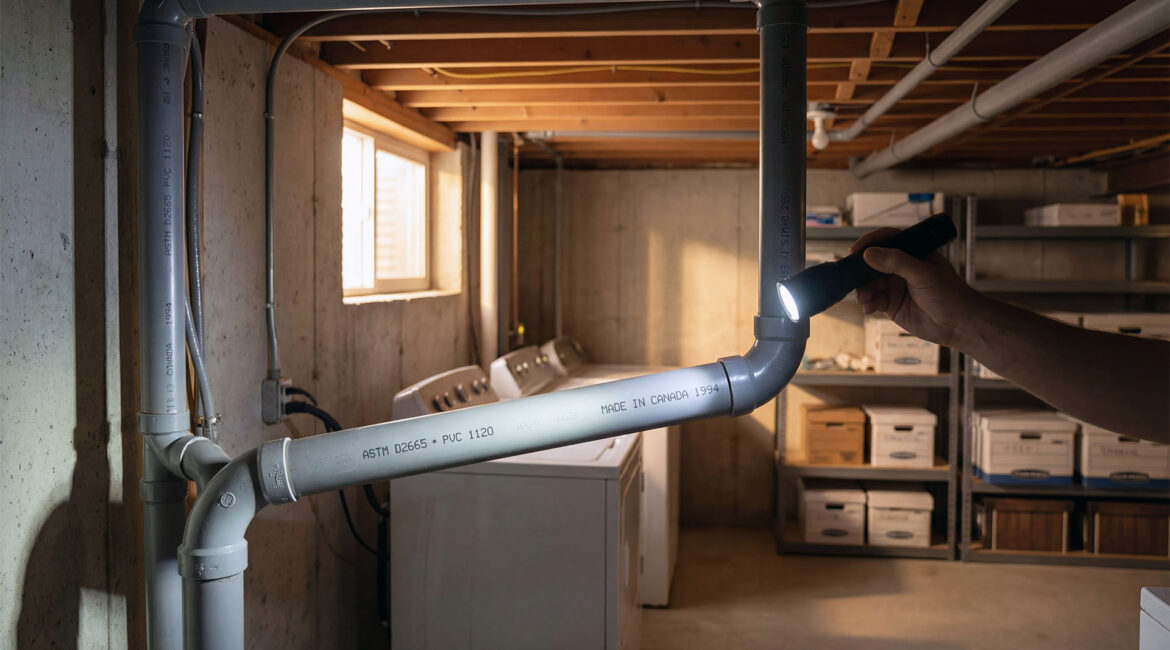
We’ve crawled through enough Surrey basements to know what Poly B looks like and where it tends to hide. The good news is that a basic inspection takes about 15 minutes and doesn’t require any tools beyond a flashlight.
What You’ll Learn
- Where to look first (and the spots most people miss)
- How to tell Poly B from other grey pipes
- What do those stamped codes mean
- How to document what’s there
- Signs it’s time to call someone
Where Poly B Likes to Hide
If a home went up between 1980 and the late ’90s, there’s a decent chance Poly B runs through it. Builders loved the stuff back then. It was flexible, cheap, and fast to install.
BC codes allowed it until 1998, which means even some early 2000s homes in Cloverdale or Fleetwood might have sections left over from partial renos where new work got tied into old.
Start With the Easy Access Points
The water heater is the best place to begin. Supply lines there are usually visible without moving anything.
Then peek under the bathroom and kitchen sinks. These connections stay accessible in most homes.
Don’t Skip the Basement
The basement or crawl space tells the biggest story. Main supply lines often run exposed along the joists, and that’s where the full picture comes together.
Bring a flashlight. Poly B looks a lot like other grey materials when the lighting’s bad, and the stamp markings are small.
Upper Floors and Laundry
Two-storey home? Check the attic where lines branch to upstairs bathrooms.
And don’t skip the laundry area. Those washing machine hookups tend to stay original long after everything else gets updated.
Reading the Pipe Itself
Grey color gets people’s attention, but it’s not proof. Poly B can also show up white or light blue, and plenty of other plastic pipes come in grey too.
The stamps tell the real story.
What the Codes Mean
Grey pipes get mistaken for Poly B all the time. CPVC, PEX, and other plastics can look nearly identical in dim basement lighting.
The stamps settle it. Poly B will say “PB2110” or “PB2120” somewhere along the length, usually with the manufacturer’s name and pipe size. Those stamps repeat every few feet, so if one spot’s hard to read, try another.
Check the Fittings Too
Poly B systems used either plastic fittings (grey or black acetyl) or copper crimp rings. The plastic ones have a worse track record.
Knowing which type is in the home matters when it comes to assessing risk.
The Touch Test
Here’s a trick: run a finger along any pipe section within reach.
Feel for:
- Rough patches
- Soft spots
- Bulges or swelling
Sometimes deterioration shows up to touch before it shows up to the eye.
Getting It on Record
Finding Poly B isn’t an emergency by itself. But it does need documentation.
Why Documentation Matters
Insurance companies have gotten cautious about this stuff. Some policies won’t cover water damage from Poly B failures anymore, full stop.
We can’t tell anyone when or if their system will fail. Nobody can. But having a clear record of what’s there makes insurance conversations easier and helps with planning down the road.
What to Capture
Grab photos of every accessible section. Get the stamp markings in focus.
For each photo, write down:
- Location (e.g., “basement north wall,” “under ensuite sink”)
- Fitting type (plastic or copper)
- Any visible issues (white buildup, discoloration, bulging)
Next Steps After Finding Poly B
If grey pipes with “PB2110” show up, it’s worth a call to the insurance company to understand what’s covered.
After that, a professional assessment fills in the gaps. We can check sections behind walls, evaluate overall condition, and talk through options. Some folks replace right away. Others keep an eye on things and budget for later. Either approach makes sense depending on the situation.
When to Call a Pro
A flashlight and 15 minutes covers the visible stuff. But Poly B runs through walls, ceilings, and floors too.
Call for a Professional Assessment if:
- Poly B is confirmed and the home has plastic (acetyl) fittings
- Visible pipes show discoloration, bulging, or white residue at joints
- The insurance company requests documentation or a plumber’s report
- Sections are inaccessible behind finished walls or ceilings
- There’s been any history of pinhole leaks or unexplained water damage
We can use specialized equipment to trace lines behind drywall and give a full picture of what’s there. Sometimes a partial replacement makes sense. Sometimes monitoring is fine. Hard to know without seeing the whole system.
Key Takeaways
- Where to look: Water heater, under sinks, basement/crawl space, attic, laundry area
- How to identify: Grey pipe with “PB2110” or “PB2120” stamped on it
- Fitting types matter: Plastic fittings have higher failure rates than copper crimp rings
- Document everything: Photos with visible stamps, locations, and fitting types
- Check with insurance: Some policies exclude Poly B water damage
- Professional assessment: Helps find hidden sections and evaluate overall risk
The Bottom Line
A solid self-check covers the water heater, under the sinks, and whatever’s visible in the basement or crawl space. Grey pipes stamped “PB2110” or “PB2120” confirm Poly B. Fitting type matters too. And good photos now save headaches later.
If Poly B turns up and there are questions about what to do next, we’re happy to take a look and have an honest conversation about it.