Crawl Space Pipe Protection Before the Freeze
Nobody thinks about crawl space pipes until a cold snap hits, and water stops flowing. That’s the worst time to discover bare copper running 30 cm (12 inches) from frozen ground with nothing between it and -5°C (23°F) air.
Here in South Surrey, we don’t get Arctic winters. But we don’t need one. A single overnight freeze can split a pipe or crack a fitting, and the damage happens fast once it starts.
What You’ll Learn
- Why crawl space pipes freeze before anything else
- Which insulation fits different pipe types
- Where to focus efforts for the biggest payoff
- How to catch freezing before pipes burst
- When it’s smarter to call a plumber
Crawl Spaces Are Basically Freezers
Here’s the thing about crawl spaces: they’re designed to ventilate, not insulate. That makes them one of the coldest spots in the entire house, and pipes down there feel it first.
Cold Air Pools at the Bottom
Cold air is heavy. It sinks and settles at the lowest point, which is exactly where crawl space pipes live. Any gap in the vapour barrier or a vent that’s still open gives freezing air a direct path to bare plumbing.
A pipe along the floor joists can freeze solid even when the kitchen upstairs feels perfectly warm. That disconnect catches a lot of homeowners off guard.
Dampness Speeds Things Up
Surrey’s wet winters make this worse. Moisture hangs in crawl space air, condenses on cold pipe surfaces, and that thin film of water turns to ice fast once temperatures drop. It’s a one-two punch: cold plus damp.
Pro Tip: Before wrapping any pipes, check the vapour barrier on the crawl space floor. Tears or missing sections let ground moisture creep up and create the exact conditions that freeze pipes faster.
The Right Insulation for the Right Pipe
Different pipes need different protection. Grabbing whatever’s on the shelf at the hardware store can leave gaps, literally, that defeat the whole purpose.
Foam Pipe Sleeves
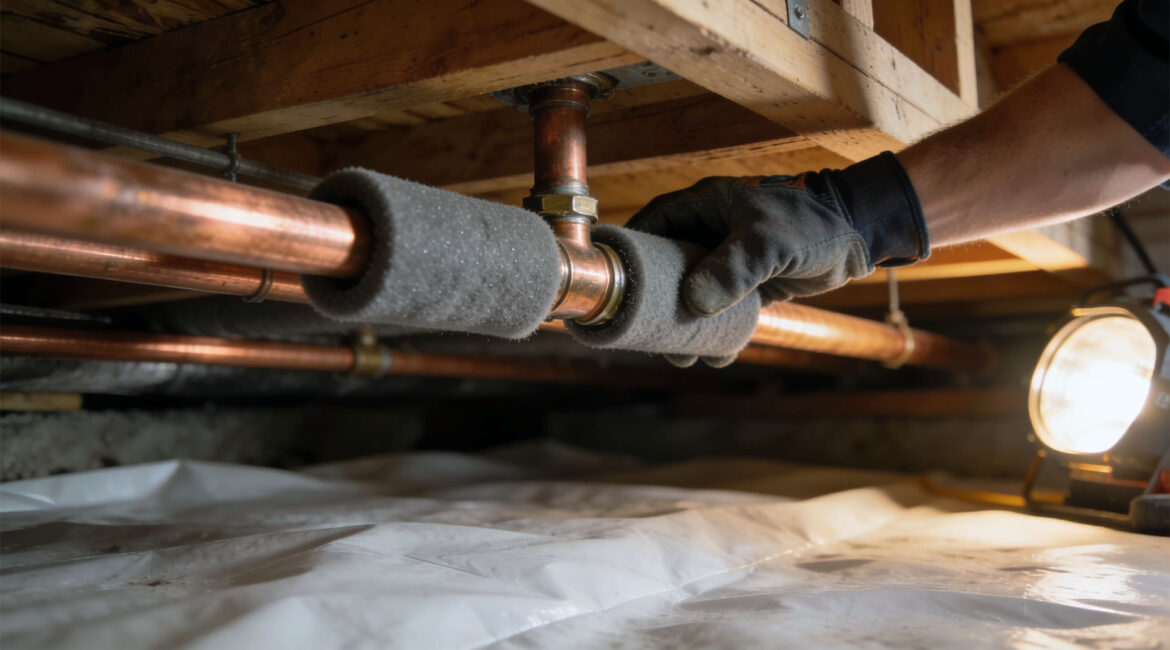
Pre-slit foam tubes are the go-to for most homeowners. They come in sizes from 1.3 cm (½ inch) to 5 cm (2 inch) diameter and slide right over straight pipe runs.
The fit matters more than the material. Loose sleeves leave air pockets that trap cold instead of blocking it.
Fibreglass Pipe Wrap
Foam sleeves don’t bend well. For elbows, tees, and joints, fibreglass wrap does a much better job of hugging irregular shapes. Secure it with wire ties or cold-rated tape, not regular electrical tape (it peels in low temperatures).
Self-Regulating Heat Cable
When temperatures routinely hit -10°C (14°F) or lower, insulation alone won’t cut it. That’s not weekend-warrior territory anymore. Self-regulating heat cable wraps around the pipe under the insulation and ramps its warmth up or down based on temperature.
Pro Tip: Heat cable needs a checkup every fall. A cracked section or a loose connection won’t put out enough warmth when it counts, and there’s no warning until a pipe freezes.
Where to Start First
Time and budget are always limited. Not every pipe in the crawl space carries the same risk, so it makes sense to tackle the most exposed sections first.
Pipes Along Exterior Walls
These lose heat the fastest. They’re sitting right against the foundation with cold soil on the other side. Any copper or CPVC running along the perimeter goes to the top of the list.
Pipes Near Open Vents
Some older homes in the Fraser Valley still have crawl space vents from when building codes required them. Those vents funnel cold air straight to nearby pipes. Anything within 60 cm (2 feet) of an open vent is at high risk on freezing nights.
Supply Lines Before Drain Lines
Supply lines hold water under pressure. When ice forms and expands inside, that pressure has nowhere to go, and that’s what splits the pipe. Drain lines don’t hold standing water the same way, so they’re lower priority.
Catching a Freeze Early
The difference between a minor thaw and a major repair often comes down to catching the problem in time. A couple of quick checks during cold snaps can save a lot of grief.
Weak Water Flow
Turn on a tap first thing on a cold morning. If it normally runs strongly but comes out as a trickle, ice is probably forming somewhere in the supply line. That’s the early warning.
Frost on the Outside of Pipes
Visible frost or ice crystals on a pipe surface in the crawl space means the metal has dropped below zero. The water inside isn’t far behind. If there’s frost on the outside, act quickly.
Pro Tip: After a hard overnight freeze, open the tap on the lowest level of the home. Strong flow means everything’s clear. A weak stream, or nothing at all, means it’s time to move fast.
When to Call a Pro
Call a Plumber If
- A pipe has already burst or shows cracks after freezing
- Water flow won’t come back after gentle thawing attempts
- Multiple pipe runs along exterior walls have no insulation at all
- Heat cable installation covers long or complicated pipe routes
- There’s standing water or signs of structural damage in the crawl space
Why Professional Help Matters
We carry thermal imaging cameras that show exactly where ice is forming inside a pipe, no guesswork. We can also look at the bigger picture: ventilation, vapour barrier, and pipe routing. Sometimes, all these need attention together rather than one patch at a time.
Key Takeaways
- Crawl spaces trap cold air low, putting bare pipes at the front of the freeze line
- Foam sleeves cover straight runs; fibreglass wrap handles, bends, and fittings
- Start with pipes along exterior walls and near open crawl space vents
- Weak water flow on cold mornings is the earliest warning of ice forming
- Call a pro if pipes have burst, flow won’t return, or a heat cable is needed
The Bottom Line
A Saturday afternoon spent wrapping crawl space pipes can prevent a week’s worth of water damage cleanup. The trick is getting the right insulation on the right pipes before the cold arrives.
If crawl space plumbing is on the to-do list, we can take a look and handle the tricky parts.