Poly B pipe is not just a plumbing risk anymore. Many BC insurers now charge more, quietly cut water damage coverage, or refuse to write a policy on a home that still has it. Find out what your policy says before your renewal date, because after a pipe lets go is the wrong time to ask.
Why is Poly B an insurance problem now?
Poly B became an insurance problem because insurers stopped treating it as ordinary old plumbing. Water damage is one of the most expensive claim types in Canada, and Poly B failures feed into it. So underwriters started pricing that risk, or walking away from it.
What is Poly B, and where do you find it?
Poly B is a grey plastic water pipe, used in a lot of homes built between the mid 1980s and the late 1990s. Look for PB2110 stamped on the pipe. It usually shows up near the hot water tank, in a crawl space, under a sink, or at the shut-off valves.
Grab a flashlight tonight. It takes about five minutes to find out whether this article is about your house or somebody else’s.
Bought your first place recently? Nobody hands you a list of what is in your walls. Check the seller’s disclosure statement and your home inspection report, because one of them probably names the pipe material.
Why did insurers turn on it?
Poly B rarely gives you warning. The pipe and the fittings break down slowly, then a joint gives out at two in the morning. The water lands inside a wall or a ceiling, which is exactly where a repair gets expensive.
That is a bad combination for an insurer. Hard to predict, costly when it happens. So they tightened terms on the homes most likely to generate the claim.
Poly B does not announce itself. The first sign is usually water where water should not be.
What are BC insurers doing at renewal?
BC insurers are taking three positions on Poly B, and the trend has moved one direction for years now. Some raise your premium. Some renew you but carve up the water damage coverage. Some will not write a new policy until the pipe is out.
Higher premiums and quieter coverage cuts
The middle option is the one that catches people. Your policy renews, nothing looks alarming, and the water damage section is not what it was. Coverage gets capped, or damage traced to the plumbing system gets carved out entirely.
You would not notice. That change arrives as a revised wording document in an envelope, not as a phone call from anyone.
Flat refusal to write the policy
The hard version shows up when you switch providers or when you sell. Some insurers now decline to quote a house with Poly B still in it. Others quote it, then ask for proof of replacement before they will issue.
Here is where the clock starts to hurt. A buyer who finds this during a subject removal period has days to solve it, not months. Deals fall apart over exactly this, and the seller is the one holding the problem.
Not sure what is actually in your walls? We can confirm it before your broker asks, and tell you what replacing it would involve.
Free quote, no obligation.
One question for your broker at renewal: does this policy still cover water damage from the plumbing system, and did that change since last year?
Does your policy already exclude Poly B?
Your policy may already limit or exclude Poly B damage, and most homeowners have never read the part that says so. The wording is not dramatic. It sits in the water damage clause and in the exclusions list near the back.
Three places to look tonight
Pull up your policy and read the water damage coverage section first. Then read the exclusions. Then read any endorsement or rider pages, because that is usually where a specific plumbing condition gets named.
If the wording is not clear, ask your broker to confirm it in writing. A friendly verbal answer is worth nothing in the middle of a claim.
The wear and tear trap
Most policies cover damage that is sudden and accidental. They do not cover gradual deterioration. Poly B fails slowly, and that gap is where claims go to die.
An insurer can look at a failed fitting and call it expected wear rather than a sudden event. Whether that argument sticks depends on your policy and your circumstances. The lesson holds either way: having water damage coverage is not the same thing as being covered for this. A slow leak behind drywall is the same argument in miniature, which is why finding a hidden leak early matters more than it sounds.
What changes once the pipe is gone?
Replacing Poly B removes the condition your insurer is reacting to, which is the entire point. A home repiped in PEX or copper gets underwritten like any other house of its age.
Keep the paperwork
Insurers want documentation, not your word for it. Hang onto the invoice from a licensed contractor, any permit records, and photos of the new pipe. Put them somewhere you can actually find them in three years.
Premiums often improve after a repipe. How much depends on your insurer, your claims history, and the rest of your file. Treat any specific percentage you read online with suspicion.
Half a repipe is not a repipe
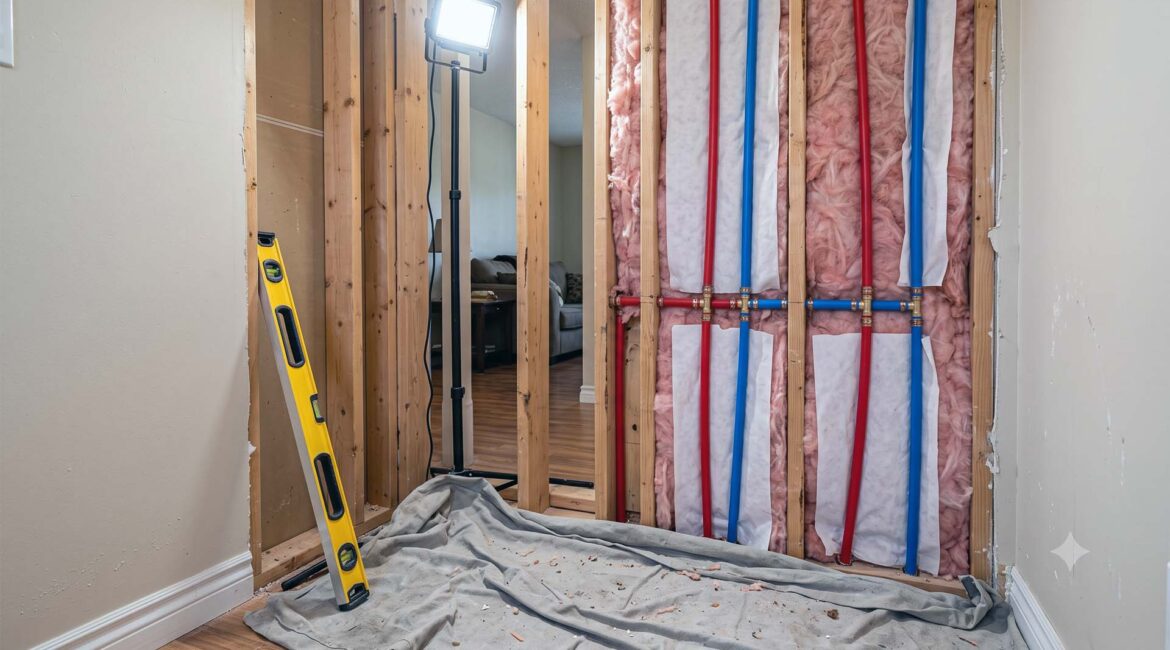
Replacing only the easy runs sounds reasonable and satisfies almost nobody. The failure risk stays in the walls, and the insurer who started this conversation wants the system gone. Our whole-home Poly B replacement work is scoped that way for the same reason.
If insurance is the reason you are doing the work, ask the insurer what they will accept before anyone opens a wall. Doing it twice is the expensive way.
When to call us
Identifying Poly B is a job you can do yourself. Flashlight, hot water tank, look for the PB2110 stamp, take a photo. That part costs you nothing but five minutes.
Call a licensed plumber when any of this applies:
- You cannot confirm what the pipe is, because most of it is behind finished walls
- Your insurer or broker has asked for documentation of your plumbing
- You have found a stain, a soft spot in drywall, or a fitting that looks swollen
- You are listing the house and want this settled before an inspection raises it
- You want a replacement plan and a quote in writing before you commit to anything
Recognise yourself in that list? Book a look at the plumbing and get the answer in writing.
Free quote. Monday to Friday, 8:00 AM to 5:00 PM.
Anything past the shut-off valve is licensed-trade territory. That line exists because a fitting installed slightly wrong will hold for two years and then will not.
The bottom line
Poly B stopped being a maintenance question. It is an insurance question now, and the timeline is not yours to set. Your renewal date is already on the calendar. A buyer’s insurer will ask eventually. The pipe will fail when it fails.
Was your home built between the mid 1980s and the late 1990s? Find out what is in your walls this week, then read your policy before the renewal notice shows up.
We repipe Poly B homes across South Surrey and can tell you what you have before you talk to your broker. If you would rather send details first, reach the office through our contact page.
Free quote. Monday to Friday, 8:00 AM to 5:00 PM.