Frozen Pipes? 3 Spots to Check Before You Call for Help
Here are the safest ways to get water flowing again in your home without causing a flood.
Few things are more frustrating than turning on a tap in February and hearing nothing but silence. You expect the rush of water to brush your teeth or start the coffee, and instead, you get a sputter and a dead stop. That silence is the sound of a homeowner’s least favourite morning.
Your first instinct might be to grab a hair dryer, crank the heat, and attack the pipe until water comes out. But you need to pause. Most frozen pipes are fixable without professional assistance if caught early, but there is a specific window where you can fix it yourself.
Some homeowners save the day with a space heater, while others turn a frozen pipe into a massive renovation by rushing the process. Before you assume the worst or book a service call, here are the first things to check to get the water running safely.
In this guide, we’ll cover:
- The Safety Scan (Do This First)
- The Open Faucet Rule
- The Hair Dryer Method
- Why This Happens Locally (The Micro-Climate)
- When it’s time to call a professional
- How to stop this from happening next winter
The Safety Scan
Why this causes the problem: When water turns to ice, it expands. It pushes outward with incredible force, enough to crack solid metal. If the pipe couldn’t handle that push, the ice might be the only thing plugging the hole right now.
If you melt that “cork” in a broken pipe, you are going to have water everywhere. It turns a frozen pipe into a flooded basement in seconds. That’s why you never start heating a pipe until you’ve looked at it closely.
What to look for:
- Bulges: Copper or PEX pipes that look swollen, like a snake that ate a large meal. This means the structural integrity is gone.
- Cracks: Look for tiny hairline fractures running along the length of the copper. These are often hard to see, so run your finger along the pipe (carefully) to feel for them. A split means the pipe is dead and must be replaced.
- Grey Plastic (Poly B): If your home was built between 1978 and 1998, you likely have Poly B piping. This is extremely common in many local neighbourhoods. Poly B gets brittle with age and often shatters when frozen.
How to check it safely:
- Find the frozen section. This is usually in an unheated crawl space, a garage, or near a drafty rim joist in the basement.
- Run your hand along the pipe. You are feeling for bumps, bulges, or frost on the outside.
- Look closely for any splits or wet spots. Use a bright flashlight.
If this is the issue, do this next: Stop immediately. Do not try to thaw it. Shut off your main water valve and call us.
That pipe needs to be cut out and replaced. Thawing it will only release the water into your home.
⚠️ Safety Note: If the pipe is behind a finished wall on the outside of your house, you can’t check it safely. Thawing blindly behind drywall is a major flood risk because you won’t see the leak until it soaks through your baseboards.
The Open Faucet Rule
Why this causes the problem: This is the step most homeowners miss. As ice melts inside the pipe, it turns back into water. But heat also creates steam pressure.
If that pressure has nowhere to go, it can burst the pipe even if you are being careful with the heat. You need to give the pressure an escape route. You also need to know when you’ve succeeded.
What to look for:
- A tap that produces no water or just a weak trickle when you turn it on.
- If no water is coming out of any tap in the house, the freeze is likely at your main shut-off or where the service line enters the foundation.
How to check it safely:
- Figure out which tap is fed by the frozen line.
- Open BOTH the hot and cold handles all the way. Even if only the cold line is frozen, opening both helps relieve pressure in the system.
- Leave them open. Do not close them until water is flowing freely again.
If this is the issue, do this next: Keep the tap open during the entire process. You want to see water dripping the second the ice starts to melt. That drip is a sign of success because it means water is pushing past the blockage.
The Hair Dryer Method
Why this causes the problem: You need to apply heat gently. Blasting a frozen pipe with a propane torch, heat gun, or open flame is dangerous. Dry wood framing in older homes catches fire faster than copper conducts heat.
We see more damage from unsafe thawing attempts (torches and heat guns) than we do from the ice itself. A burst pipe is fixable; a house fire is a tragedy.
What to look for:
- An accessible section of pipe that feels noticeably colder than the rest.
- Areas where the insulation has fallen off or gaps in the vapour barrier.
How to check it safely:
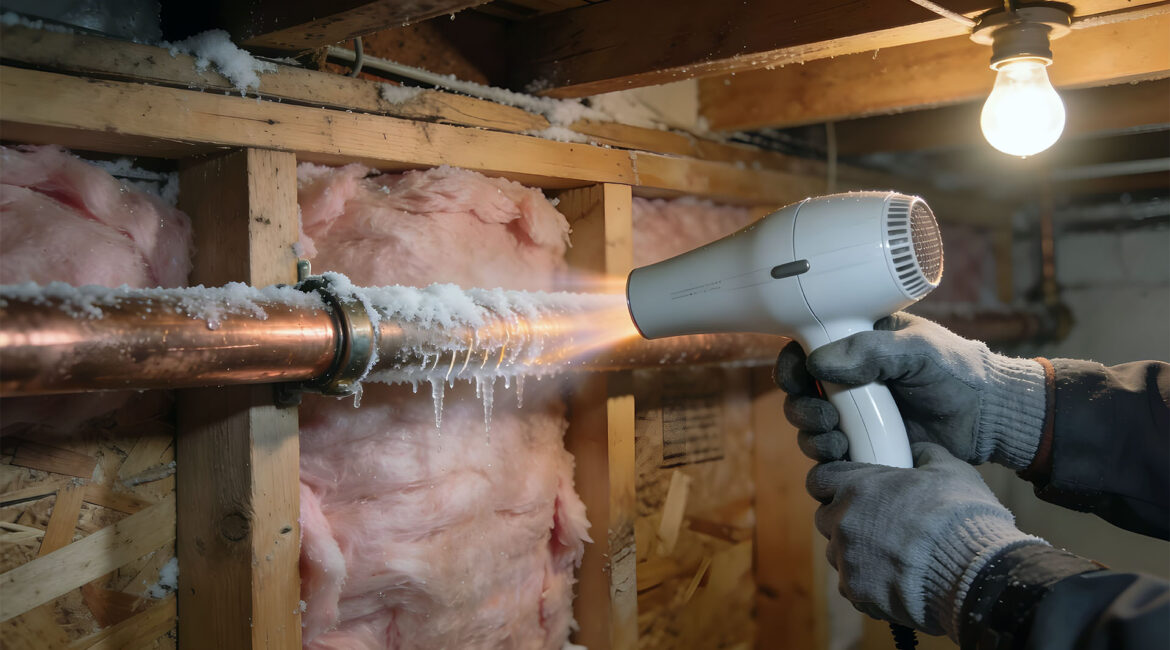
- The Hair Dryer: Point a hair dryer at the pipe, moving it back and forth. This provides safe, controlled heat.
- Direction: Start heating the pipe near the faucet end, not the blockage end. This makes sure the melting water has an escape route through the open tap.
- Patience: Keep at it for 10 to 30 minutes until you hear cracking ice or see flow.
If this is the issue, do this next: If you don’t have a hair dryer, warm towels soaked in hot water work well too. Just keep swapping them out as they cool. You can also use a portable space heater, but keep it at least three feet away from any walls or flammable items.
✅ Pro Tip: If the freeze is under a sink on an outside wall, open the cabinet doors. This lets the house’s warm air circulate into the cabinet and warm the pipes naturally. It’s a simple trick that often works overnight.
Why This Happens Locally
We live in a unique climate here. Unlike the prairies, where it stays cold for months, the Lower Mainland gets “freeze-thaw” cycles. It rains, then drops to -5°C, then rains again.
This catches homeowners off guard. You might think your pipes are fine because they survived January, but a sudden cold snap in February can catch a drafty area by surprise.
Most freezes we see locally happen in two specific spots:
- Uninsulated Crawl Spaces: Many older ranch-style homes have vented crawl spaces. If those vents aren’t closed in winter, cold air blows directly onto your pipes.
- The Garage: The water lines often run through the garage ceiling in certain home designs. If the garage door is left open, or if the insulation is thin, those pipes freeze fast.
When to Call a Pro
If you’ve checked the items above and the water isn’t flowing, it may be time to call a professional.
You should call us if:
- The freeze is inside an exterior wall: We have specialized equipment to thaw these safely without cutting your drywall apart blindly.
- You have Poly B piping: These pipes are too fragile for DIY thawing. The risk of shattering is high, and often it makes more sense to replace the section than to risk thawing it.
- You see a split or bulge: This is a repair job, not a thaw job.
- You can’t find the freeze: If the whole house is out, the freeze might be at the main entry or underground.
What to Do While You Wait for Help
If you’ve called us and we’re on our way, there are a few things you can do to minimize the damage. These steps also help make the repair go faster.
- Shut off the main water. This is the most important step. If that pipe bursts while you’re waiting, you want the water supply cut off.
- Clear the area. Move boxes, storage bins, and furniture away from the frozen spot. This gives us room to work immediately when we arrive.
- Locate your shut-off key. If your main shut-off is outside at the curb, make sure you know where it is and that it’s accessible.
Prevention Tips
To reduce the chances of this happening again next February:
- Insulate: Snap foam insulation tubes over any exposed pipes in your garage or crawl space.
- Seal Drafts: Use spray foam to seal gaps where cable lines, dryer vents, or gas lines enter your siding. This is really common in local homes where renovations have left small gaps.
- The Drip Trick: On nights below -5°C, leave the problem faucet dripping slightly. Moving water is much harder to freeze.
- Disconnect Hoses: Make sure your garden hoses are disconnected from the hose bibs. If you leave a hose attached, it traps water inside the faucet, which can freeze and crack the pipe inside your wall.
Frequently Asked Questions
- Can I use a heat gun instead of a hair dryer? We don’t recommend it. Heat guns can get hot enough to melt PEX piping or singe wood framing. A hair dryer is slower, but it’s much safer for DIY work.
- How long does it take for pipes to unfreeze? It depends on how much ice there is. It can take anywhere from 30 minutes to a few hours. If you’ve been heating an exposed pipe for 45 minutes with no result, the freeze might be deeper in the wall.
- Will the pipes thaw on their own? Eventually, yes. But waiting is risky. As the ice sits there, it continues to expand and stress the pipe. It’s better to deal with it actively or call for help before the pipe bursts.
Quick Recap
Most cases of frozen pipes come down to three things:
- Drafts hitting the pipe in a garage or crawl space.
- Lack of insulation on pipes near outside walls.
- Panic leading to unsafe thawing methods (like open flames).
Start with the easiest checks first. Finding the spot and using a hair dryer is often all it takes to save your morning.
If you’d rather skip the guesswork, we can help.
We provide local plumbing services, and we’ll diagnose the issue quickly and safely. If a repair is needed, we’ll give you a clear price before we start work. Contact us today to book an appointment. Call (604) 897-4989