Sediment Buildup 101: How to Do It Yourself
TL;DR: There’s a good chance you’ve never done anything to your hot water tank — and that’s okay, most people haven’t. But mineral sediment builds up inside it every year, making it work harder than it needs to and quietly shortening its life. A flush takes about 30–45 minutes and costs you nothing. Here’s the full picture.
Key Takeaways:
- Sediment buildup is completely normal — it happens in virtually every home with a storage tank water heater
- Skipping the annual flush leads to higher bills, louder operation, and a tank that wears out faster than it should
- Most homeowners can handle this themselves with a garden hose and half an hour
- A few specific situations are clear signs to stop and call a pro — we’ll walk you through what to watch for
Spring Is Actually the Perfect Time for This
Your hot water tank worked hard all winter. More hot showers, colder water coming in from outside, and higher demand across the board. By the time spring shows up, your system has earned a little attention.
The honest truth is most people never think about their water heater at all — until there’s a problem. It sits in a utility room or garage, does its job without complaining, and it’s easy to just… forget it exists. That’s completely understandable. But that quiet neglect adds up over time, and the damage happens inside the tank where you can’t see it.
Flushing it once a year is one of the simplest, highest-return maintenance habits you can build as a homeowner. Thirty minutes a year to protect an appliance you use every single day. It’s worth it.
So What Actually Is Sediment?
It Starts With Your Water
Your tap water has dissolved minerals in it — calcium and magnesium mostly. Totally safe to drink, nothing to worry about on that front. But your water heater isn’t a fan.
Every time your tank heats up, those minerals separate out and sink to the bottom. A little bit at a time, season after season, they build up into a layer of sandy, gritty sediment that settles right at the base of the tank — between the heat source and the water above it.
And Here’s Where It Gets Costly
That layer of sediment acts like insulation in the worst possible way. Your heating element or burner now has to push heat through a barrier that was never supposed to be there. It works harder. It runs longer. And you pay for every extra minute of that on your energy bill.
Beyond cost, here’s what else starts to happen:
- Efficiency drops gradually — you probably won’t notice until you compare bills year over year
- Components wear out faster because they’re under more strain than they were designed for
- Gas heaters often start making a low rumbling or popping sound — that’s water getting trapped under the sediment and overheating. Not an emergency, but definitely a warning
- A tank that might have lasted 12–15 years starts looking more like 8–10
💡 Pro Tip: That rumbling or popping noise from your water heater isn’t a sign that something is broken — it’s a sign that sediment has built up and your tank is overdue for a flush. If you catch it at this stage, a good flush can bring things back to normal. The longer you wait, the harder that becomes.
How to Do It Yourself
Good news: this is genuinely manageable for most homeowners. You don’t need any special tools or plumbing experience. You just need a garden hose, a pair of work gloves, and about 30–45 minutes where you’re not in a rush.
Walk Through It Step by Step
Step 1 — Turn off the heat first. Electric tank? Flip the breaker. Gas tank? Turn the dial to “pilot.” Don’t skip this part. Running your heating element or burner while the tank is draining dry can damage it immediately — and that’s a much worse day than the one you started with.
Step 2 — Give the water time to cool. The water sitting in your tank is genuinely hot enough to cause serious burns. If you can wait a few hours, do it. If you’re working with a tight schedule, go slowly and keep checking the hose temperature as you work.
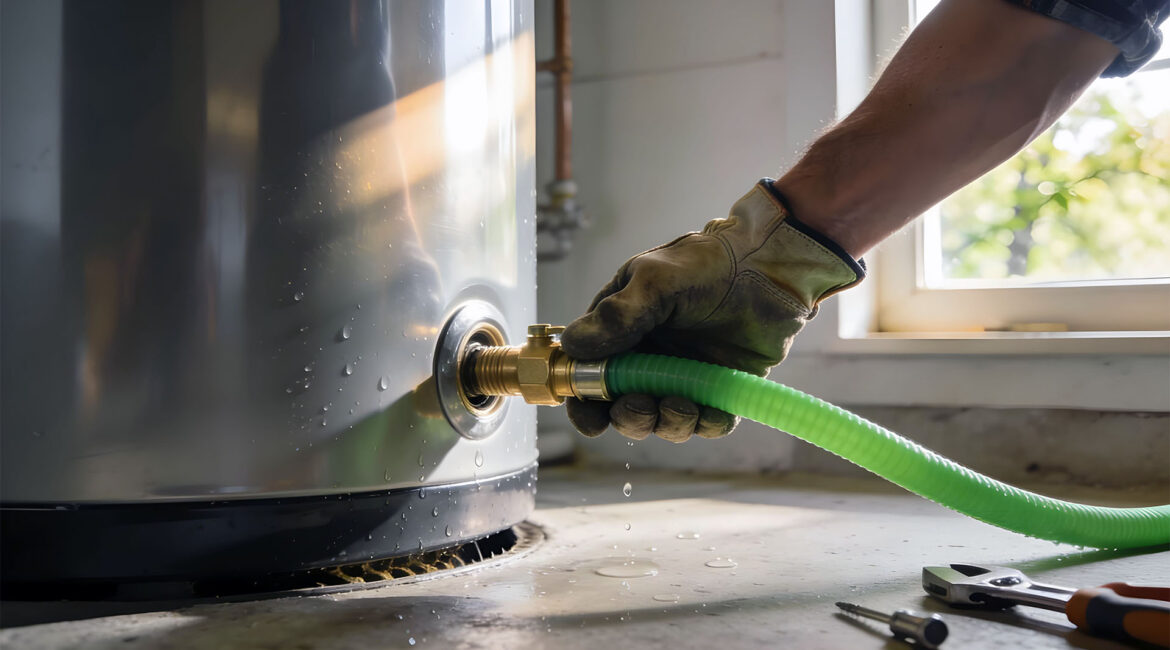
Step 3 — Hook up your garden hose. Find the drain valve at the bottom of the tank — it looks exactly like an outdoor hose bib. Attach your hose and run the other end somewhere the water can go safely: outside, a floor drain, or a large bucket. Just keep in mind you’re moving a lot of water.
Step 4 — Shut off the cold water supply. There’s a shutoff valve on the cold inlet line coming into the top of the tank. Close it.
Step 5 — Open a hot water tap somewhere in the house. Doesn’t matter which one — kitchen sink, bathroom faucet, whatever’s convenient. This relieves the pressure inside the system and helps everything drain faster. Leave it running the whole time.
Step 6 — Open the drain valve and watch what comes out. The water will probably look cloudy, discoloured, or visibly gritty at first. That’s exactly what you’re trying to get out. Let it run until the water coming through the hose looks consistently clear.
Step 7 — Flush it through with fresh water. Turn the cold supply back on fully and let fresh water push through the tank for a few minutes. This stirs up anything still sitting at the bottom and flushes it out the drain hose. If the water goes cloudy again when you do this — which it sometimes does — just let it run until it clears. It’s worth being thorough here. A half-done flush doesn’t give you much.
Step 8 — Put everything back together. Close the drain valve, disconnect the hose, open the cold supply fully, and wait for the tank to refill completely before you restore power or relight the burner. That tap you left open will let you know when it’s full — water will start flowing steadily instead of sputtering.
💡 Pro Tip: Once you’ve closed the drain valve back up, watch it for a minute or two before you walk away. Older valves — especially plastic ones — sometimes weep or drip slightly after being opened for the first time in years. If yours doesn’t seat cleanly, don’t try to muscle it tighter. That’s your cue to call a plumber.
When to Put Down the Hose and Call Someone
Most of the time, this job goes smoothly. But occasionally you open things up and realize it’s turned into something else. Here’s when to stop and get a professional involved:
- The drain valve won’t open, or it’s visibly corroded — forcing it risks cracking the valve and making your afternoon significantly worse
- It leaks after you close it — a valve that won’t reseat needs to be replaced, and that’s a plumbing job, not a DIY fix
- The water just won’t run clear — heavy sediment that won’t flush out after multiple attempts can mean the tank is too far gone to recover this way
- Your tank is pushing 10–12 years old — at this point, it’s worth having someone assess it before you disturb anything. Sometimes a flush dislodges sediment that was actually plugging a small corroded spot, and things can go sideways fast
- The rumbling keeps going after the flush — if the noise doesn’t clear up, there may be something else going on that deserves a proper look
The Bottom Line
Flushing your hot water tank is one of those maintenance tasks that feels almost too simple to matter — until you realise how much it’s quietly doing for you. Better efficiency, lower bills, less noise, longer life. All for half an hour once a year.
Most homeowners can absolutely handle this themselves, and we genuinely hope you do. But if you get into it and something doesn’t look right, don’t push through it alone — give us a call, and we’ll come sort it out with you.