TL;DR: Most water heater noises come down to one of three things: sediment buildup, pressure trouble, or a part that’s failing. Popping and rumbling usually mean it’s time for a flush, and you can handle that yourself. Hissing near the pressure relief valve is the one sound that means stop and call a plumber.
Key Takeaways:
- Popping and rumbling almost always point to sediment sitting at the bottom of the tank
- A DIY flush clears most sediment noise if you catch it early
- Hissing near the T&P valve or any fitting is not a wait-and-see situation
- Ticking and tapping are normal, not a repair signal
- Whistling usually means a valve isn’t fully open
- Multiple noises at once, or sounds that keep getting louder, mean the tank may be near the end
Your Water Heater Is Talking to You
Here’s the thing most people miss. Water heater noises aren’t random. Each one points to something specific.
The mistake we hear about most often is treating all these sounds the same. Some are harmless. Some are telling you to grab a garden hose and do a flush. And one of them means you should stop using your hot water right now.
Knowing the difference saves you money. It also saves your drywall.
Popping and Rumbling: Time to Flush the Tank
Popping is the sound we get calls about most. If your water heater sounds like someone cracking their knuckles during a heating cycle, that’s almost certainly sediment.
Here’s what’s actually happening. Minerals from your water supply settle at the bottom of the tank over time. When the element or burner heats the water underneath that layer, steam bubbles push through. That’s your pop.
Rumbling is the same problem, just further along. The sediment layer is thicker, the water is heating unevenly, and the tank is working harder than it needs to. It’s not dangerous at this stage, but it’s not something to keep ignoring.
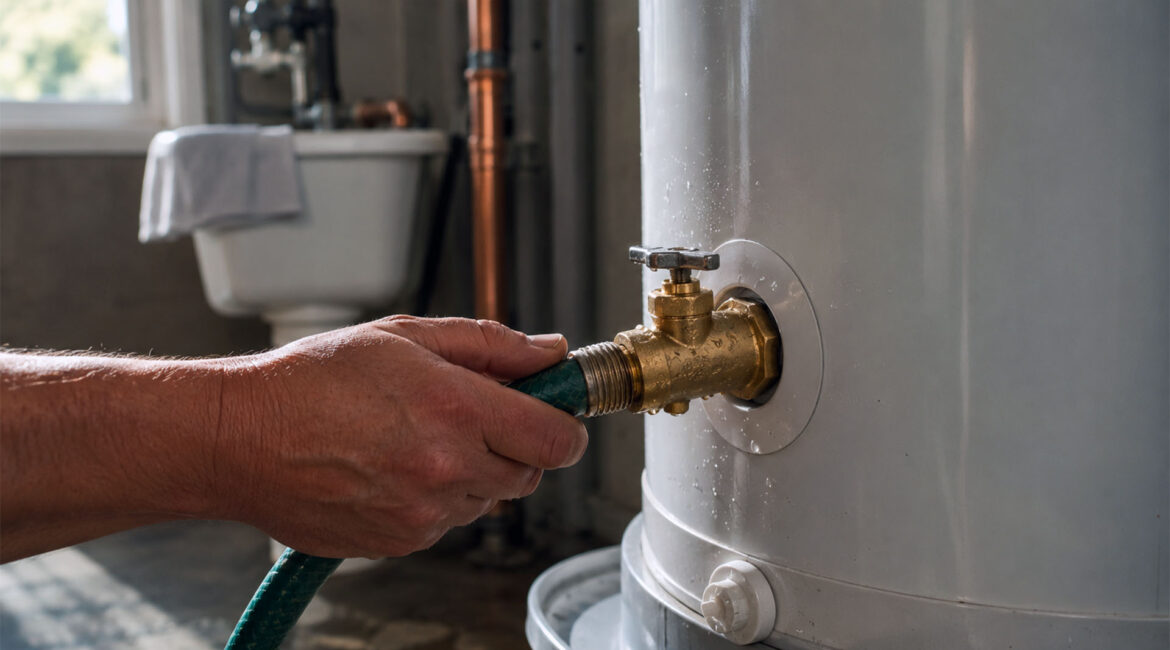
The fix is a tank flush, and you can do it yourself.
How to Flush It Yourself
This takes about 30 to 45 minutes. Here’s the sequence:
- Switch the thermostat to pilot or vacation mode (gas) or flip the breaker off (electric)
- Connect a garden hose to the drain valve at the bottom of the tank
- Run it to a floor drain or outside
- Open the drain valve and let it empty completely
- Open a hot tap somewhere in the house so you don’t create a vacuum
- Let the tank refill fully before turning the heat back on
Watch the water coming out. Clear in a few minutes means you got it. Brown or gritty means run it again.
Pro Tip (for first-timers): If your tank has never been flushed and it’s been sitting there for a few years, the drain valve itself may have calcified. Once you open it, it might not seal cleanly again. Have a replacement valve on hand before you start, or have our number ready. It’s one of those jobs that’s easy until it isn’t.
Hissing: This One’s Different
If your water heater is hissing, that’s a different conversation entirely.
A hiss coming from the temperature and pressure (T&P) relief valve means it’s actively venting. That happens when pressure or temperature inside the tank has climbed too high, or when the valve is starting to fail. The T&P valve is there to stop your tank from becoming a serious problem. When it’s making noise, something is wrong.
Hissing near a supply connection or at the base of the tank usually means a slow leak. Small leaks at fittings don’t stay small, and water near an electrical element or a gas burner is not something to monitor and see what happens.
If the hissing is coming from the tank, the T&P valve, or any fitting, stop using the hot water and call us at (604) 897-4989. Don’t try to remove or replace a T&P valve yourself. That’s licensed-trade work, full stop.
Ticking, Tapping, Whistling: Mostly Fine
Ticking and tapping sounds, especially first thing in the morning or after a big draw of hot water, are almost always just thermal expansion. Metal expands and contracts as temperatures change. You’re hearing it shift against a bracket, a joist, or the wall.
Normal. Not a repair signal.
Whistling or whining is usually a flow restriction. A valve that’s not fully open, debris in a line, or a failing inlet valve can all make a high-pitched sound during heating. Start by checking that every valve connected to the water heater is fully open. If it keeps going, that’s worth a technician’s look.
When to Call Us
Some of this is genuinely in your lane. A flush, a valve check, a look at the connections: capable homeowners do these things all the time.
These ones aren’t:
- Hissing near the T&P valve or any fitting
- A tank that’s leaking at the base
- A gas unit that smells like sulphur or combustion when it’s off
- Sounds that have suddenly gotten louder or changed completely
- Noise combined with inconsistent hot water temperatures
That last combination matters most. A tank with sediment noise, dropping hot water output, and corrosion at the base isn’t a flush-and-fix situation. It’s a replacement conversation.
The Bottom Line
Popping and rumbling mean flush the tank. Hissing means call a plumber. Ticking and tapping mean carry on.
None of this requires you to become a plumber. It just requires knowing which sound is which, so you act on the right one at the right time.
Questions about what you’re hearing? Call us at (604) 897-4989. We can usually tell you over the phone whether it’s urgent or not.